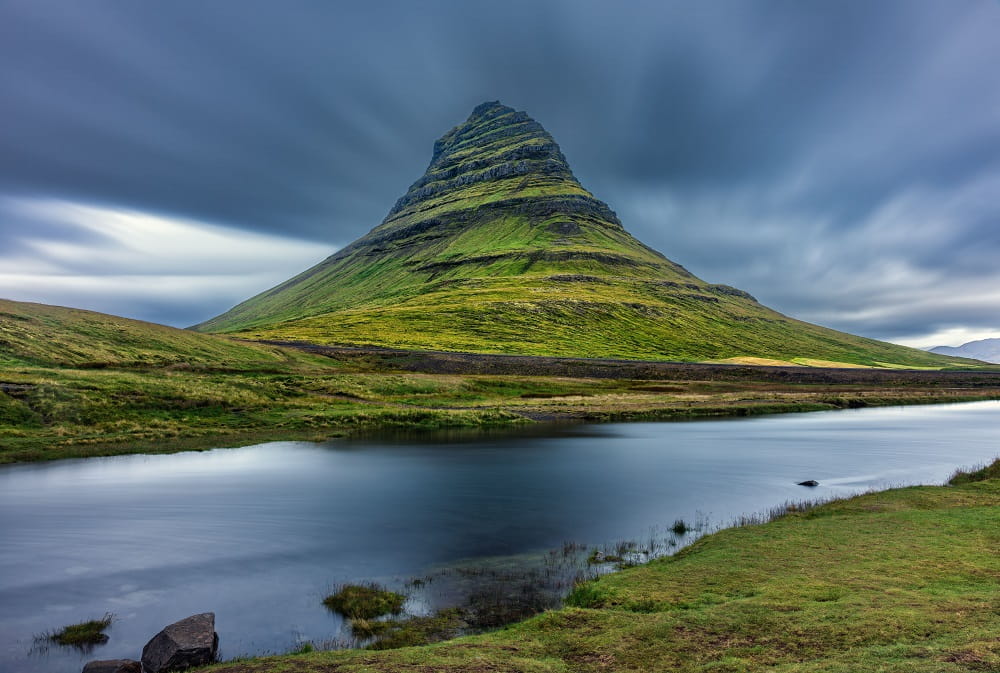
A 7 to 14 Day Iceland Ring Road Plan That Fits Your Pace
September 14th 2026
Search "Iceland Ring Road itinerary," and you will find one blogger who did it in seven days and loved it, and another who swears seven days nearly ruined their trip. Both are telling the truth. The Ring Road is 1,332 kilometers long, officially Route 1 or Hringvegur, and it is entirely possible to drive the whole loop in under 20 hours without stopping. Nobody actually does that, and the real planning question was never whether you can finish the loop. It is how much of the country you want to see along the way, and how many hours a day you are willing to spend behind the wheel to see it.
This guide builds a practical Iceland Ring Road itinerary around that tradeoff instead of around a fixed number of days. You will find a day by day route for a 10 day trip, a comparison of 7, 10, 12 and 14 day versions, guidance on where to actually sleep each night, what kind of car the route needs, and the mistakes that show up again and again in traveler feedback once the trip is already underway.
Key takeaways
The Ring Road covers 1,332 kilometers and can be driven properly in 7 days at a rushed pace, 10 days at a comfortable one, or 12 to 14 days if you want to add the Westfjords or Snæfellsnes Peninsula.
There is no official rule on driving clockwise or counterclockwise. It comes down to whether you want the crowded South Coast first or last.
A 2WD car is legal and fine for the paved Ring Road in summer. F roads through the highlands legally require a 4x4 and only open between June and September.
Iceland's 2026 road fee is charged by distance rather than folded into fuel prices, and most rental companies now include it in the daily rate.
Moving hotels every single night is the single biggest regret travelers report after finishing the loop.
What Is the Iceland Ring Road, Exactly?
The Iceland Ring Road is Route 1, officially named Hringvegur, a 1,332 kilometer paved highway that circles the entire island and connects nearly every region of the country. It links South Iceland, East Iceland and North Iceland in one continuous loop, starting and ending near Reykjavík.
What surprises a lot of first time planners is what the Ring Road does not include. The Golden Circle, the Westfjords and the Snæfellsnes Peninsula all sit off Route 1, so a standard Iceland Ring Road itinerary does not automatically cover them. If you want any of the three, you build them in as deliberate detours rather than assuming they come with the loop. That single distinction explains more confusion in trip planning than almost anything else, since the "Ring Road" and "seeing all of Iceland" are not quite the same trip.
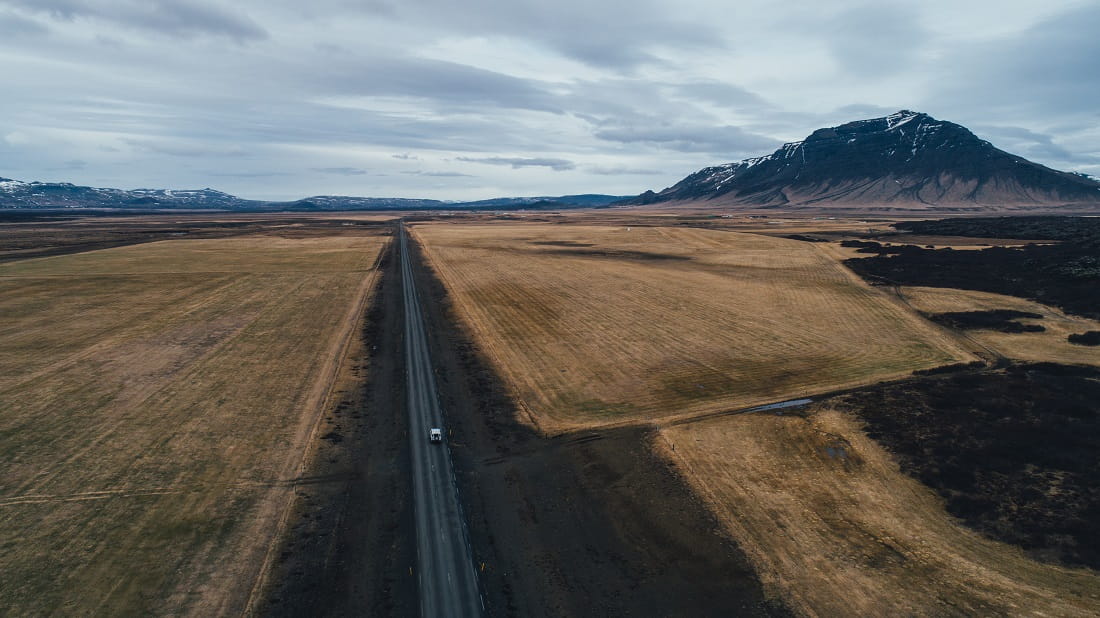
The road itself is paved for nearly its full length, well signed, and open year round, though winter changes the experience considerably. West Iceland, North Iceland and the Eastfjords each have short gravel stretches, and a handful of routes off the main highway lead onto Iceland's F roads, the unpaved mountain tracks that require a 4x4 by law.
How Many Days Do You Need for the Iceland Ring Road?

Seven days is enough to complete the Ring Road, but it leaves very little room for long stops, weather delays or detours. If your priority is finishing the full loop rather than exploring any one region deeply, seven days works, though you should expect a fast pace and a string of one night hotel stays.
Ten days is the number most experienced Iceland guides land on, and for good reason. It brings your average driving distance down to roughly 130 kilometers a day instead of nearly 190, which leaves real time for waterfalls, glacier walks and the occasional slow morning. Twelve to fourteen days is the range worth considering if you want to add the Snæfellsnes Peninsula, tack on the Westfjords, or simply prefer not to feel like you are always driving somewhere.
The Ring Road Time Budget
Think of your trip length as a budget you are spending on kilometers rather than a fixed itinerary you have to follow. Divide 1,332 by your number of driving days, and you get your daily distance target. Anything under 150 kilometers a day leaves comfortable room for stops. Anything over 200 kilometers a day means long stretches where the car, not the scenery, is running the show. Add 300 kilometers to your total if you are including Snæfellsnes, and 600 to 900 more for the Westfjords, then rerun the math before you commit to a number of days.
Iceland Ring Road Itinerary Length Comparison
Itinerary Length | Daily Driving Distance | Best For | Detours Realistic | Overall Pace |
|---|---|---|---|---|
7 days | About 190 km/day | Repeat visitors or a tight schedule | None, Route 1 only | Fast, one night stays |
10 days | About 130 km/day | First time visitors wanting the full loop | Short side trips only | Comfortable |
12 days | About 110 km/day | Travelers wanting Snæfellsnes included | Snæfellsnes Peninsula | Relaxed |
14 days | About 95 km/day | Travelers adding the Westfjords | Westfjords and Snæfellsnes | Slow and flexible |
16+ days | Under 85 km/day | Photographers, campers, repeat visitors | Full country coverage | Very relaxed |
For most first time travelers, a 10 day Iceland Ring Road itinerary is the winner. It is long enough to enjoy the country without rushing every stop, and short enough to fit inside a normal vacation allowance.
Should You Drive the Ring Road Clockwise or Counterclockwise?
There is no official rule, and since it is a loop, the total distance and time barely change either way. The real question is whether you want the busiest region of the country, the South Coast, at the start of your trip or at the end.
Driving counterclockwise takes you south from Reykjavík first, so you see Seljalandsfoss, Skógafoss, Reynisfjara and the glacier lagoon early, while everyone else who flew in that same morning is doing exactly the same thing.
 The upside is that the quieter regions, the Eastfjords, North Iceland and the Westfjords if you add them, come later, once the crowds have thinned. Clockwise reverses that. You head into the quieter north and east first and save the South Coast for the end, which some travelers prefer because it front loads flexibility. If a storm forces a schedule change early on, it is easier to reshuffle plans in the less time sensitive regions than to lose your one shot at Reynisfjara because of weather.
Pro tip
If you are including the Golden Circle on day one, drive it clockwise from Reykjavík and drop down to the South Coast that same evening. You can then continue the rest of the loop counterclockwise without backtracking.
What Does a 10 Day Iceland Ring Road Itinerary Look Like?
Here is a realistic day by day structure for a 10 day loop, assuming a counterclockwise route from Keflavík International Airport. Adjust the pace up or down depending on your own trip length.
Day 1:
Land at Keflavík, pick up your rental car, and drive to Reykjavík or straight to the Golden Circle if you arrive early. Overnight in Reykjavík or Selfoss.
Day 2:
Golden Circle stops at Þingvellir National Park, Geysir and Gullfoss, then south to the coast. Overnight around Vík.
Day 3:
Seljalandsfoss, Skógafoss, Dyrhólaey and Reynisfjara black sand beach. Continue toward Kirkjubæjarklaustur or stay a second night in Vík.
Day 4:
Fjaðrárgljúfur Canyon in the morning, then on to Jökulsárlón Glacier Lagoon and Diamond Beach. Overnight in Höfn.

Day 5:
Stokksnes and Vestrahorn near Höfn, then the scenic drive through the Eastfjords to Egilsstaðir or Seyðisfjörður.
Day 6:
Stuðlagil Canyon and Vök Baths near Egilsstaðir, then north toward Lake Mývatn.
Day 7:
Hverir geothermal area, Dimmuborgir lava field, and Dettifoss waterfall around Lake Mývatn. Overnight in Mývatn or Akureyri.
Day 8:
Goðafoss waterfall en route to Akureyri, with an optional whale watching trip from Húsavík. Overnight in Akureyri.
Day 9:
Drive west toward Borgarnes, with a short detour to Hraunfossar and Barnafoss waterfalls if time allows.
Day 10:
Return to Reykjavík or Keflavík for departure, with time for Reykjavík sightseeing or the Blue Lagoon if your flight schedule allows.
This same structure compresses into 7 days by combining days 2 and 3, skipping the Eastfjords detours to Stuðlagil and Seyðisfjörður, and pushing straight from Egilsstaðir to Mývatn. It stretches into 12 to 14 days by adding a Snæfellsnes Peninsula loop after day 9, or a Westfjords detour between days 8 and 9 for those approaching from the north.
Where Should You Stay Each Night on the Ring Road?
Outside Reykjavík and the South Coast, most towns on the Ring Road are small. Vík has fewer than a thousand residents, and Akureyri, the largest stop outside the capital, holds around 20,000 people. You are not really choosing between big towns. You are choosing a strategic base close to the next morning's attractions.
The Overnight Anchor Method
Rather than booking a new hotel every night, pick two or three anchor towns where you stay two nights and take day trips from there. Vík works well for the South Coast, and Lake Mývatn or Akureyri work well for the north. This single change is one of the most common pieces of advice from travelers who have done the loop more than once, and it cuts down on the packing, unpacking and check in routines that make a fast paced itinerary feel exhausting by day six.
Common overnight stops on a counterclockwise route include Reykjavík, Vík, Kirkjubæjarklaustur, Höfn, Egilsstaðir, Lake Mývatn, Akureyri and Borgarnes. Húsavík and Seyðisfjörður are worth an overnight if your itinerary has the extra day, since both require a short detour off Route 1.
What Kind of Car Do You Actually Need for the Ring Road?
For a standard Iceland Ring Road itinerary that sticks to paved Route 1 in summer, a 2WD car is legal and generally enough. The road is well maintained and mostly asphalt, and most Ring Road attractions sit a short walk from a paved or well graded parking area. If your route pushes into the Westfjords, onto gravel side roads, or into the shoulder season months, stepping up to an AWD or 4x4 vehicle buys real peace of mind on loose surfaces and in crosswinds.
Once you know which regions your trip will actually touch, renting a car in Iceland is a good place to compare vehicle options, and weighing what type of rental car actually fits your route is worth doing before you book rather than after.
F roads are a separate category entirely. These are Iceland's unpaved highland routes, marked with an F before the road number, and Icelandic law requires a 4x4 to drive them. They typically open sometime between June and September depending on snowmelt, and driving one in a 2WD car is illegal and voids your insurance.
If you want to plan around any of this, the mistakes first time visitors make when driving in Iceland walks through the traffic rules, the road tax and the insurance details that matter most for a first Ring Road trip.
Winter changes the equation further. Between November and March, daylight can shrink to four or five hours, and ice, wind and short term road closures become part of the plan rather than the exception. If your Iceland Ring Road itinerary falls in that window, choosing the right car for winter driving in Iceland matters more than almost any other planning decision you will make.

Iceland introduced a new distance based road fee at the start of 2026, replacing the old system where the charge was built into the price of fuel. Most rental companies now add it as a daily amount rather than a separate bill, and fuel prices dropped after the change, so the net effect on most travelers has been small.
Because a full Ring Road loop with detours easily covers 1,400 to 1,700 kilometers, confirming what mileage limits apply to your rental is worth doing before you sign anything, and checking
what security deposit your rental company will hold is worth doing at the same time, since Iceland's deposits tend to run higher than in many other countries.
What Do People Get Wrong When Planning the Ring Road?
The single biggest mistake is treating the Ring Road as a checklist rather than a route. Travelers who try to fit every waterfall, canyon and black sand beach into a seven day trip tend to end up seeing very little of any of them, since even a quick stop with photos eats twenty or thirty minutes once you count parking and walking.
The second mistake is underestimating the Eastfjords and North Iceland. Most first time itineraries load up on South Coast stops and treat the stretch between Höfn and Mývatn as a driving day rather than a destination in its own right, which means skipping genuinely worthwhile places like Stuðlagil Canyon and Vök Baths simply because nobody budgeted time for them.
The third is assuming shoulder season weather behaves like summer weather. May, September and October can be genuinely pleasant, but wind and sudden storms are far more common outside June through August, and an itinerary with no flexibility built in can fall apart fast when a single road closure changes your whole day.
Iceland Ring Road vs South Coast Only, Which Should You Choose?
If you have five days or fewer, a South Coast only trip usually beats a rushed attempt at the full Ring Road. You get Seljalandsfoss, Skógafoss, Reynisfjara, Vík and Jökulsárlón Glacier Lagoon without the long, quiet driving stretches through the north that a short Ring Road attempt forces you to rush past anyway.
With seven or more days, the full Iceland Ring Road itinerary generally wins, since it adds Lake Mývatn, the Eastfjords and Akureyri, regions with a genuinely different character from the South Coast and far fewer crowds. The honest tradeoff is time in the car. A South Coast trip keeps daily driving short. A full Ring Road trip asks for more hours behind the wheel in exchange for seeing considerably more of the country.
Frequently Asked Questions
How many days do you need for the Iceland Ring Road?
Seven days is enough to complete the loop, but ten days is the number most experienced travelers recommend for a comfortable pace with real time to stop. Twelve to fourteen days suits travelers adding the Westfjords or Snæfellsnes Peninsula.
Should you drive the Iceland Ring Road clockwise or counterclockwise?
Neither direction changes the total distance. Counterclockwise puts the busy South Coast first and the quieter north and east later. Clockwise saves the South Coast for the end, which can help if weather forces schedule changes early in the trip.
Is the Iceland Ring Road worth doing in winter?
It is possible but demanding. Daylight can shrink to four or five hours, roads ice over, and the highland F roads close completely. Winter rewards travelers chasing the northern lights, but it asks for a 4x4, winter tires and a flexible schedule.
Do you need a 4x4 for the Iceland Ring Road?
A 2WD car is legal and generally sufficient for the paved Ring Road in summer. F roads through the highlands legally require a 4x4, and gravel side roads, shoulder season travel and winter conditions all make an AWD or 4x4 a safer choice.
What is the Iceland Ring Road distance in kilometers?
The Ring Road is 1,332 kilometers, or about 828 miles, and circles the entire island along Route 1, also called Hringvegur.
Does the Ring Road include the Golden Circle?
No. The Golden Circle sits northeast of Reykjavík and is separate from Route 1, though many travelers add it to day one of their Iceland Ring Road itinerary before heading south.
How much does an Iceland Ring Road road trip cost?
Costs vary widely by season and car type, but budget travel guides commonly cite a range of roughly 150 to 350 US dollars a day for two people once car rental, fuel, accommodation and food are included.
Do you need an International Driving Permit for the Ring Road?
Most travelers do not. A valid license from the US, Canada, the UK, the EU or another country using Latin script is enough on its own, as long as it has been held for at least a year.
Can you do the Ring Road without a rental car?
Yes, through guided multi day tours or long distance buses, though a self drive trip gives far more control over timing and stops.
What is the best time of year to drive the Iceland Ring Road?
Summer, from June through August, offers the easiest driving, the longest daylight and full access to F roads and the highlands. Shoulder season and winter trade some of that ease for fewer crowds and, in winter, a chance at the northern lights.
Planning Your Iceland Ring Road Itinerary
The right length for your Iceland Ring Road itinerary comes down to three numbers: how many days you have, how many kilometers you are comfortable driving each day, and how many regions you actually want to see rather than pass through. Seven days gets you around the loop. Ten days gets you around it comfortably. Twelve to fourteen days gets you the Westfjords or Snæfellsnes Peninsula on top of everything else.
Next steps
Pick your trip length using the Ring Road Time Budget above, then match your route to it before booking anything else
Choose two or three overnight anchor towns instead of a new hotel every night
When you are ready to book your vehicle, you can book a reliable car rental with FinalRentals, with pickup available at Keflavík International Airport for almost every Ring Road route.
Sources and Methodology
This guide draws on distances and road classifications from Iceland's official road authority, alongside 2026 road fee and fuel pricing figures and published traveler itinerary data from established Iceland travel guides. Daily distance figures in the comparison table are calculated directly from the confirmed 1,332 kilometer Ring Road length. Time sensitive details such as fees, opening dates for F roads and fuel prices should be confirmed close to your travel date, since these can shift from year to year.
Reference: Icelandic Road and Coastal Administration, road conditions and route data.
About the Author
The FinalRentals Editorial Team is a group of travel researchers and mobility specialists who produce practical, up to date road trip and rental guidance for travelers worldwide. This guide was researched using current Icelandic road authority data, 2026 rental industry pricing, and published Ring Road itinerary structures from established Iceland travel resources, then checked against FinalRentals' own Iceland rental data. Fact checked by the FinalRentals editorial team.