Dont Pay Extra: Best Credit Cards for Car Rental Benefits (2026)

May 14th 2024
Last Updated: August 24
The best credit cards for car rental benefits carry primary coverage, so you can decline the counter's collision damage waiver without ever involving your personal auto insurer. In 2026, Chase Sapphire Reserve, Chase Sapphire Preferred, Capital One Venture X, and Ink Business Preferred all offer primary protection, each with a different annual fee and coverage cap. Secondary-coverage cards like the Amex Platinum trade primary protection for elite rental status instead.
Car rental benefits from credit cards have quietly become one of the best reasons to keep a travel card in your wallet. Cards built for frequent travelers often bundle a collision damage waiver, elevated rewards earning, and elite status with major rental brands into the annual fee you're already paying. Used correctly, these benefits can save you $15 to $60 a day at the counter and protect you if the car gets damaged or stolen.
Key Takeaways
Primary coverage pays out first, without touching your personal auto policy. Secondary coverage only fills gaps after your own insurer pays.
Counter collision damage waivers cost $15 to $42 a day for an economy car, and a full protection bundle can run $40 to $60 a day, according to WalletHub's and MoneyGeek's 2026 pricing data.
You must decline the rental company's CDW and charge the entire rental to the eligible card, or the card's benefit does not activate.
Turo and other peer to peer car sharing rentals, plus luxury, exotic, and antique vehicles, are excluded from nearly every card's coverage.
Card coverage never includes liability or medical costs. It only reimburses physical damage and theft to the rental vehicle itself.
Table of Contents
1. Detailed Overview of Car Rental Benefits
2. Credit Card vs Debit Card Rental Coverage
3. Primary vs Secondary Coverage
4. Exclusions and Limitations
5. Best Credit Cards for Car Rental Benefits in 2026
6. The Rental Coverage Ladder
7. How to Actually Use Your Card's Coverage at the Counter
8. Mistakes That Cost Travelers Money
9. Additional Tips and Considerations
10. Quick Summary
11. Frequently Asked Questions
A Detailed Overview of the Car Rental Benefits Offered by Credit Cards
Collision Damage Waivers (CDW)
A credit card collision damage waiver (CDW), sometimes called a loss damage waiver (LDW), reimburses you for damage or theft to a rental car once you decline the rental company's own waiver and pay for the rental with the eligible card. Coverage comes with limits.
The waiver typically activates after your regular auto insurance pays its share, unless the card offers primary coverage (more on that below).
It covers physical damage to the rental car itself, but excludes certain vehicles such as pickup trucks, cargo vans, and moving trucks.
Some situations void coverage entirely, including off road driving or driving under the influence.
Say you rent a car for a weekend trip and scrape it against a wall. The repair bill comes to $1,500. Your personal auto insurance covers $1,000, and a secondary-coverage credit card picks up the remaining $500. Always confirm your card's CDW limits before you rely on them for a specific vehicle class.
Elite Status and Elevated Earning Rates
Certain premium cards unlock elite status inside a rental brand's loyalty program, which can mean skipping the counter line entirely or a complimentary upgrade. These cards also often multiply the rewards you earn on the rental itself, sometimes 2x to 10x points or miles per $1 instead of the standard 1x.
On a $100 rental, a card earning 1x points nets you 100 points. A card earning 3x nets 300 points for the identical spend, a difference that adds up fast across a year of business travel.
Credit Card vs Debit Card Rental Coverage
This is one of the most common points of confusion travelers raise online, and the answer is straightforward: debit card rental protection is rare. Auto rental coverage is a credit card benefit tied to the issuer's benefits guide, not to the payment rail. Most debit cards, even ones issued by the same bank as a covered credit card, carry no collision waiver at all, and a rental company may also place a larger security hold or run a credit check when you pay with debit.
If a debit card is your only option, call the issuer's benefits line before booking to confirm whether any protection applies, and budget for the rental company's own CDW as a backup.
Primary and Secondary Coverage
Secondary coverage is the more common benefit. Your personal auto insurance pays first, and the credit card's coverage picks up whatever is left after your policy's limits and deductible are applied. If you don't own a car or carry auto insurance, secondary coverage from a credit card typically becomes your primary protection by default.
Primary coverage pays first, in full, up to the card's policy limit, without your personal auto insurer ever being notified. You file one claim, with one company, and your personal insurance rates stay untouched. This is the stronger benefit, and it's the deciding factor for most of the cards recommended below.
Exclusions and Limitations of Credit Card Car Rental Insurance
Peer to Peer Car Sharing Services
Most credit cards exclude person to person car sharing platforms such as Turo from rental car insurance benefits entirely. If you book through a peer to peer service and get into an accident, your credit card's CDW very likely will not step in, leaving you responsible for the repair bill unless the platform's own insurance product covers it.
No Liability or Medical Coverage
Credit cards do not provide liability or medical coverage as part of their rental car benefit. They reimburse loss or damage to the rental vehicle itself, not injuries to you, your passengers, or damage you cause to someone else's property or car. If you cause an accident and the other party sues for damages, your card's rental benefit will not cover that liability exposure, and neither will it cover medical bills from the crash.
Best Credit Cards for Car Rental Benefits in 2026
Annual fees, coverage caps, and rental length limits below reflect each issuer's published terms as of 2026. Always confirm current figures in your own card's guide to benefits before you travel, since issuers do revise these terms.
Card | Annual Fee | Coverage Type | Max Reimbursement | Rental Length Cap |
|---|---|---|---|---|
Chase Sapphire Reserve® | $795 | Primary | Up to $75,000 | 31 consecutive days, most countries |
Chase Sapphire Preferred® Card | $95 | Primary | Up to $60,000 | 31 consecutive days, most countries |
Capital One Venture X Rewards | $395 | Primary | Up to $75,000 | 15 days in home country / 31 days abroad |
Ink Business Preferred® Credit Card | $95 | Primary (business rentals) | Up to $60,000 | Vehicles with MSRP of $125,000 or less |
American Express Platinum Card® | $895 | Secondary, plus elite status | Varies; optional plan $12.25–$24.95 per rental | Enrollment required for elite tiers |
Chase Freedom Unlimited® | $0 | Secondary | Varies by policy limit | Standard rental terms |
Chase Sapphire Reserve® — Best Overall Protection

Image source: Chase — Official Chase Sapphire Reserve card page
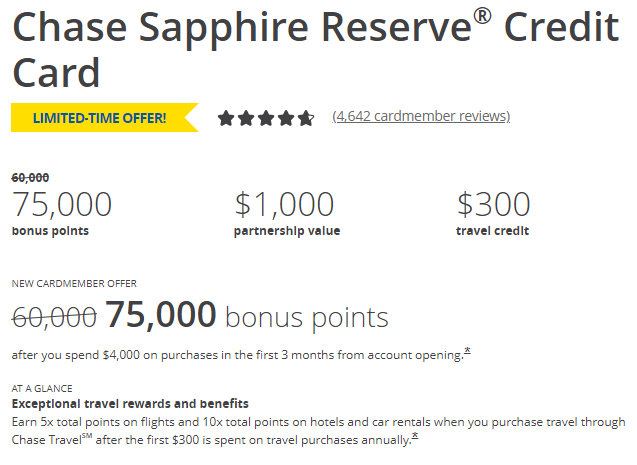
The Chase Sapphire Reserve pairs the strongest primary coverage on this list, up to $75,000 for theft and collision, with 3x points on travel and dining worldwide and complimentary status with rental partners including Avis, National, and Silvercar. The $795 annual fee is steep, but a $300 annual travel credit and lounge access offset a meaningful chunk of it for frequent travelers.
Chase Sapphire Preferred® Card — Best Low Annual Fee

Image source: Chase — Official Chase Sapphire Preferred card page
The Sapphire Preferred carries the same primary coverage structure as its pricier sibling, capped at $60,000, for a $95 annual fee. It earns 2x points on travel and dining, which makes it the practical pick for travelers who rent occasionally rather than constantly.
American Express Platinum Card® — Best for Rental Elite Status

Image source: American Express — Official Platinum fact sheet
The Platinum Card takes a different approach: its rental protection is secondary by default, but it unlocks complimentary elite status with Avis Preferred, Hertz Gold Plus Rewards, and National Emerald Club Executive, plus an opt-in premium protection plan priced at roughly $12.25 to $24.95 per rental period for travelers who want primary-stle protection on top. Enrollment is required for the elite tiers.
Capital One Venture X Rewards Credit Card — Best for Luxury Travel Lovers

Image source: Capital One — Official Venture X Rewards Credit Card page
Venture X bundles primary coverage up to $75,000 with unlimited 10x miles on hotels and rental cars booked through Capital One Travel. The 15-day domestic cap is shorter than the Chase cards, so check the clock on longer road trips.
Ink Business Preferred® Credit Card — Best for Business Rentals

Image source: Chase — Official Ink Business Preferred card page
For business owners who rent regularly, Ink Business Preferred converts to primary coverage on business rentals, reimbursing up to $60,000 for vehicles with an MSRP of $125,000 or less, alongside 3x points on the first $150,000 spent annually across travel, shipping, and advertising.
Chase Freedom Unlimited® — Best No-Annual-Fee Option

Image source: Chase — Official Chase Freedom Unlimited card page
Most no-fee cards skip rental protection altogether. Chase Freedom Unlimited is an exception, bundling secondary coverage at no annual cost, which still fills the gap after your personal auto policy pays. It won't replace a primary-coverage card, but it beats relying solely on the counter's CDW.
Pro Tip
Run the math on a single trip before picking a card for the annual fee alone. A two-week rental with a $30-a-day counter waiver adds $420 to the bill. That's nearly half the Sapphire Preferred's $95 annual fee, recovered on one trip, before counting the card's other travel perks.
The Rental Coverage Ladder
When more than one protection option is on the table, rank them in this order to avoid paying twice for the same coverage:
Primary card coverage. Pays first, no deductible, no personal insurer involved.
Secondary card coverage plus personal auto insurance. Works, but means two claims and a possible deductible.
Standalone third party rental insurance (for example Allianz or Bonzah), useful when a card excludes the vehicle class or destination.
The rental company's own CDW at the counter. The most expensive option, and the fallback of last resort.
Most travelers only need step one or two. Reach for standalone insurance or the counter waiver only when your card's exclusions genuinely leave a gap, such as an excluded country or a specialty vehicle.
How to Actually Use Your Card's Coverage at the Counter
Check your card's guide to benefits before you travel. Coverage limits, excluded vehicle classes, and excluded countries vary by issuer and change over time.
Pay for the entire rental with the eligible card. Splitting payment across two cards, or paying a deposit with a different card, typically voids the benefit.
Decline the counter's CDW or LDW clearly when asked. Say so out loud and confirm it's marked on the rental agreement before you sign.
Photograph the car from every angle before driving off, including the odometer, fuel gauge, and any existing scuffs or dents.
File a claim with your card's benefits administrator promptly if damage happens, typically within 45 to 60 days of the incident, per most issuers' claim windows.
Mistakes That Cost Travelers Money
Travelers researching this topic on forums like Reddit tend to run into the same handful of expensive misunderstandings, including common car rental scams:
Assuming any travel card includes primary coverage. Most premium travel cards, including the Amex Platinum, default to secondary protection or elite status rather than primary reimbursement.
Renting a vehicle class the card excludes. Pickup trucks, cargo vans, motorcycles, and antique or exotic cars fall outside most policies, even on cards with strong CDW benefits.
Splitting payment between cards or paying the deposit separately. This is the single fastest way to void coverage without realizing it until a claim is denied.
Letting the counter agent add the CDW automatically. Busy counters sometimes bundle the waiver into the contract unless you explicitly decline it and ask for it removed.
Not checking the excluded countries list before an international trip. Coverage that works flawlessly at home can exclude entire regions abroad.
Our team at Final Rentals fields this exact question from travelers picking up cars across our 64-country network, and the pattern repeats everywhere from Puerto Rico to Saudi Arabia: renters assume the card in their wallet covers everything, then find out at the counter that the vehicle class or destination falls outside the policy. Confirming coverage before you book, not after you're standing at the desk, is the difference between a smooth pickup and an unplanned $30-a-day add-on.
Additional Tips and Considerations
If your card offers primary coverage, decline the rental company's own insurance offer at the counter to avoid paying for overlapping protection.
Read the fine print on excluded timeframes and excluded countries before you rely on card coverage for an international trip.
Not every rental is covered by a collision damage waiver. Confirm the vehicle class you're booking matches your card's covered categories.
Weigh the type of coverage, the exclusions, and the card's other travel perks together, not the rental benefit alone, when choosing a card.
Quick Summary
Primary coverage beats secondary coverage whenever the two are options on the same trip.
Chase Sapphire Reserve and Sapphire Preferred remain the strongest all-around primary coverage picks in 2026.
Amex Platinum trades primary protection for elite rental status and an optional paid upgrade.
Turo, luxury vehicles, and liability claims sit outside every card's rental benefit.
Confirm your card's excluded countries and vehicle classes before, not during, your trip.
Frequently Asked Questions
Does credit card rental insurance cover Turo or peer to peer rentals?
No. Almost every credit card excludes person to person car sharing platforms such as Turo from its rental car insurance benefit, regardless of coverage tier.
Do I still need the counter's CDW if my card has primary coverage?
No. Decline the rental company's CDW at the counter and pay the full rental with the eligible card to activate primary coverage.
Does credit card rental coverage include liability or medical costs?
No. It reimburses damage or theft to the rental vehicle only. Liability to other people or vehicles, and medical costs, are not covered.
What happens if I pay with one card and the deposit with another?
Coverage is typically voided. Most issuers require the entire rental charged to a single eligible card to activate the benefit.
Do debit cards get the same rental car insurance as credit cards?
Rarely. Auto rental coverage is a credit card benefit. Most debit cards carry no equivalent protection, so confirm with your issuer before relying on one.
How long can a rental last and still stay covered?
Most cards cap coverage at 15 to 31 consecutive days, depending on the issuer and whether the rental is in your home country or abroad.
Are luxury or exotic rental cars covered by credit card CDW?
Usually not. Most policies exclude antique, exotic, and high value luxury vehicles regardless of the card's overall coverage tier.
Does credit card rental insurance work outside the United States?
Often yes, but check your card's excluded countries list before booking, since coverage abroad varies by issuer and can differ from domestic terms.
What should I do immediately if a rental car gets damaged?
Photograph the damage, report it to the rental company, keep copies of the rental agreement, and file a claim with your card's benefits administrator within the stated claim window.
Can I use credit card rental coverage for a one way rental?
Usually yes, since coverage is tied to the card and rental length rather than the drop-off location, but confirm any one way fees and excluded countries separately.
Wrap-Up
Choosing the right credit card for car rental benefits protects your trip budget and your personal auto insurance rates at the same time. Whether you prioritize primary coverage, reward points, or elite status, match the card to how often you actually rent, and always confirm your car rental deductible and loss damage waiver terms before you travel. If you're unsure whether your collision damage waiver in car rental insurance already applies, it's also worth checking whether your personal auto insurance already covers rental cars before you pay for anything extra at the counter.
For a side by side look at how credit card protection compares with rental company insurance, or a refresher on how security deposits for car rentals and rental car reimbursement insurance coverage work together, our related guides walk through the details. It's also worth reviewing common car rental scams and why you should never skip rental car insurance overseas, since a well matched credit card only protects you if the rest of the booking is legitimate too.
Whatever card ends up in your wallet, you can book affordable car rentals with FinalRentals across our global network and confirm your coverage options at the same time you book, so there are no surprises when you reach the counter.
Sources and Methodology
Card terms, annual fees, and coverage figures were verified against issuer facing coverage summaries published by The Points Guy (updated April 2026) and Motley Fool Money (updated April 2026). Collision damage waiver pricing reflects WalletHub's 2026 analysis and MoneyGeek's 2026 cost breakdown. General consumer guidance on renting a car is available from the Federal Trade Commission.
Reference: FTC Consumer Advice — Renting a Car
About the Author
Final Rentals Editorial Team
The Final Rentals Editorial Team is a group of travel researchers and mobility experts dedicated to creating accurate, practical, and up to date travel content for drivers worldwide. Our articles are based on official resources, issuer benefits guides, and destination research to help travelers plan safer and more enjoyable journeys. From car rental advice to road trip guides and local travel tips, we provide reliable information to help you explore with confidence.