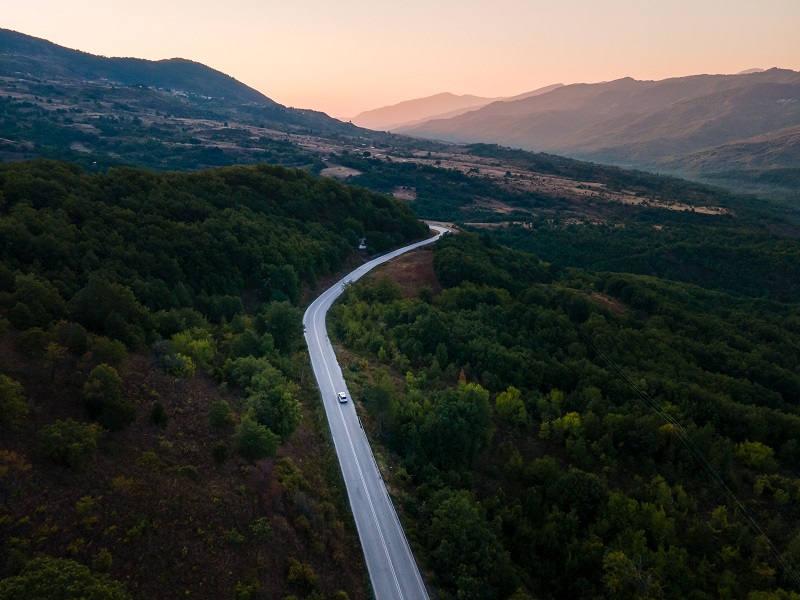
10 Best Places to Visit in Georgia Country: From Tbilisi to Tusheti

September 6th 2024
Updated September 2026
The best places to visit in Georgia, the Caucasus country, are Tbilisi, Kazbegi, Svaneti, Batumi, Kakheti, Vardzia, Mtskheta, Uplistsikhe, Kutaisi and Tusheti. Citizens of roughly 95 countries can enter Georgia visa free and stay for up to 365 days, while a mandatory health and accident insurance requirement took effect for tourists entering Georgia on January 1, 2026.
This guide exists to help you choose the best places to visit in Georgia, the small Caucasus country wedged between the Black Sea and the mountains that divide Europe from Asia (not the American state that shares its name, which crowds a lot of search results). Whether this is your first visit or your third, the ten destinations below cover the mix of history, mountains, wine country and coastline that makes Georgia one of the more rewarding countries to explore by car right now.
I have refreshed this list for 2026: the entry and insurance rules that changed at the start of the year, current airport details, and where the mountain roads genuinely stand today rather than where they stood a few seasons ago. Read on, then start planning your route.
Key Takeaways
Three airports handle international arrivals: Tbilisi International Airport, Kutaisi Airport, and Batumi's Alexander Kartveli International Airport, which grew passenger numbers by around 29% in 2025.
The Tusheti road and the highest reaches of Svaneti typically stay open only from June through September; snow and landslides close them the rest of the year, so build your itinerary around this window rather than a fixed date.
A one way rental, picking up in Tbilisi and dropping off in Kutaisi or Batumi, can save a full day of backtracking on a Georgia road trip and is worth pricing before you commit to a route.
Table of Contents
10 Must See Places to Visit in Georgia (Country)
Georgia at a Glance: Quick Facts for 2026
When to Go: Best Time and Road Access by Region
Essential Tips for Travellers Visiting Georgia
Type of Rental Car You Need to Explore Georgia
Explore Georgia by Car With FinalRentals
Frequently Asked Questions
10 Must See Places to Visit in Georgia (Country)
1. Tbilisi: The Heart of Georgia
Tbilisi is Georgia's capital and largest city, home to roughly 1.2 million people, and it is where most trips to the country begin and end.
In the Old Town, the charm of Tbilisi comes through in narrow cobblestone streets, historic churches and balconied houses that lean toward each other over the lanes. The area is also known for its sulphur baths, which have drawn visitors since around the 5th century. Narikala Fortress sits on a hill above the old quarter; the climb takes some effort, but the view over the city's rooftops and the Mtkvari River makes it worth the walk.
Tbilisi is not only about its past. The futuristic Bridge of Peace crosses the river a short walk from the baths, and the Tbilisi Opera and Ballet Theatre hosts regular performances in a building that mixes Moorish and Georgian design. The city's cable car and metro make it easy to move between the old and new sides without a car, though most visitors still pick up their rental here since it holds the country's busiest airport.
Tbilisi International Airport is Georgia's busiest international gateway and is roughly a 20 minute drive from the Old Town, making it a convenient starting point for a Georgia road trip. If you plan to explore beyond the capital, you can rent a car at Tbilisi International Airport and begin your journey from here.
2. Kazbegi National Park: A Mountain Paradise
Kazbegi National Park, in the Greater Caucasus Mountains, is the destination for travelers who came to Georgia for its peaks rather than its cities.
Mount Kazbek rises to around 5,047 meters at the center of the park, one of the highest summits in the country. The best known sight here is Gergeti Trinity Church, set at about 2,170 meters with Kazbek behind it. The walk up is a real hike rather than a stroll, but the view at the top explains why the church appears on so many postcards of Georgia.
The town of Stepantsminda is the usual base, and the Georgian Military Highway that runs up from Tbilisi is one of the country's most scenic drives, climbing past the ski town of Gudauri before reaching the Kazbegi region. A tunnel and bypass project around the Kobi area has been improving winter access along this route, though the road above Gudauri can still close for short periods during heavy storms, so it is worth checking conditions before you set out in the colder months.
Kazbegi rewards hikers of most levels, from short valley walks to the multi day trek up toward the glacier. Summer, from June through September, brings the most reliable weather, but winter turns the region into a genuine ski and snowshoe destination for travelers prepared for the cold.
3. Svaneti: The Land of Towers
Svaneti, tucked into the remote northwest of Georgia, is where the country's stone defense towers and its highest peak both live.
Shkhara, Georgia's highest mountain at around 5,203 meters, rises above a region recognized as a UNESCO World Heritage Site for its well preserved medieval villages.Most visits start in Mestia, Svaneti's main town, which now has a small airport with seasonal flights from Tbilisi as well as a paved road connection, so it stays reachable for more of the year than the villages beyond it.
A trip to Svaneti is not complete without Ushguli, one of the highest continuously inhabited settlements in Europe, ringed by Caucasus peaks and dotted with medieval Svan towers. The unpaved stretch of road out to Ushguli is the part that genuinely needs a 4x4, and it can close for stretches after heavy snow or rain.
Public transport in Svaneti is thin, so most travelers rent a car for the region; if you are not driving on an EU or UK licence, check whether your rental company also wants to see an international driving permit alongside your national one.
4. Batumi: The Black Sea Gem
Batumi, Georgia's lively Black Sea city, mixes beach resort energy with a genuinely busy commercial port.
As Georgia's second largest city, Batumi draws visitors for its beaches, its modern towers along the shore and a nightlife scene that has earned it comparisons to Las Vegas, though shipbuilding, food processing and light manufacturing still make up a large part of the local economy alongside tourism.
Batumi Boulevard runs along the coastline for several kilometers and is the natural place to spend an evening, past parks, cafes and the city's modern sculptures. Just outside town, the Batumi Botanical Garden is one of the larger gardens in the region and a calm counterpoint to the boulevard's energy.
Most flights into the coast land at the airport most people still call Batumi Airport, officially Alexander Kartveli Batumi International Airport. With around 1.23 million passengers in 2025, roughly 29% more than the year before, the airport is a major gateway to Georgia's Black Sea coast, and Batumi International Airport Car Rental gives travelers the option to pick up a car and continue their journey along the coast or inland.
Hotel prices tend to ease between September and November; June through August is the peak season and the most expensive stretch of the year to book.
Because Batumi and Tbilisi sit at opposite ends of the country, many travelers price out a one way car rental picking up in one city and dropping off in the other rather than driving the same route twice.
5. Kakheti: The Wine Region
Kakheti, in eastern Georgia, is where the country's roughly 8,000 year winemaking tradition is easiest to taste in person.
The region formed in its current shape by merging historic Kakheti with the mountainous Tusheti area, and today it is best known for its vineyards, its qvevri clay vessel winemaking method, and towns built for slow visits rather than quick stops.
Sighnaghi, known locally as the City of Love, sits on a hilltop with cobblestone streets and views over the Alazani Valley. Several family run wineries around town offer tastings, and the romantic setting makes it a popular overnight stop rather than a pass through. Telavi, about an hour further into the region, is a quieter alternative base with its own wineries and historical sites if Sighnaghi feels busy.
Kakheti also sits close to Georgia's border with Azerbaijan at Lagodekhi, and a growing number of self drive travelers combine a Georgia trip with a short extension across the border. If that is part of your plan, checking the best time to visit Azerbaijan can help you decide when to make the crossing.
Give the wine region at least two to three days if you can. That is generally enough time to see the scenery, taste widely and still leave room for an unplanned stop at a roadside winery.
6. Vardzia: The Cave Monastery
Vardzia, a cave monastery complex in southern Georgia near the Turkish border, is one of the country's more striking historical sites.
Built in the 12th century, the complex once housed thousands of monks and today includes more than 600 rooms carved into the rock face of Erusheti Mountain: churches, chapels and living quarters among them. The Church of the Dormition, at the center of the site, still holds frescoes dating back to its original construction.
Vardzia sits roughly a four hour drive from Tbilisi, which makes it a long day trip, closer to 12 to 14 hours round trip if you also stop at nearby Rabati Fortress and Khertvisi Fortress. Most visitors find it worth the distance for the scale of the site and the chance to see several of Georgia's older fortresses along the same route. May through October generally offers the mildest weather and the most reliable road conditions for reaching it.
Expert Tips
Book your rental car's insurance add ons and a GPS unit before you fly. Coverage options and equipment are often more limited at a smaller airport counter, like Kutaisi's, than they are in Tbilisi.
If your route includes Tusheti, Svaneti or Kazbegi's Truso Valley, build a buffer day into your plan. Mountain weather in Georgia can change faster than the forecast does.
7. Mtskheta: The Ancient Capital
Mtskheta, about 20 kilometers from Tbilisi, is one of Georgia's oldest and most sacred cities and a UNESCO World Heritage Site.
As the ancient capital of the Kingdom of Kartli from around the 3rd century BC to the 5th century AD, Mtskheta is where Christianity was declared Georgia's official religion in 337 AD, an event that still shapes the country's religious identity. Locals sometimes call it the Second Jerusalem.
Svetitskhoveli Cathedral, an 11th century structure believed by tradition to hold Christ's mantle, draws pilgrims as well as sightseers. A short drive up the hill, Jvari Monastery looks down over the point where the Aragvi and Mtkvari rivers meet, one of the better views in the area for the effort involved in reaching it.
Every October 14, Mtskheta holds Svetitskhovloba, a religious festival honoring the cathedral's history, and the surrounding hillsides turn gold in autumn if you are visiting for scenery rather than the festival itself. A rental car makes it easy to combine Mtskheta with Uplistsikhe or Gori on the same day, since none of the three sit more than an hour or so apart.
8. Uplistsikhe: The Ancient Cave City
Uplistsikhe, meaning Lord's Fortress, is an ancient cave city in eastern Georgia, about 10 kilometers from Gori, dating back to the early Iron Age.
After the Arab occupation of Tbilisi around 645 AD, Uplistsikhe became the residence of Kartli's Christian kings and a trade hub on the caravan route between Asia and Europe. The site is carved into a rocky plateau and holds a network of more than 150 caves, tunnels and halls, some over 3,000 years old, including a rock cut theatre and several temples.
Uplistsikhe's elevated position and rock cut structures helped it function as an important religious, political and cultural centre for centuries. Given how close it sits to Tbilisi, it pairs easily with a day trip that also covers Mtskheta and Gori. May through October offers the clearest skies and easiest footing across the site's uneven stone paths.
9. Kutaisi: The Ancient City
Kutaisi, in western Georgia, is one of the country's oldest cities, its legislative capital, and home to several UNESCO listed sites.
Kutaisi is also the arrival point for many budget airlines flying into Georgia, and Kutaisi International Airport Car Rental has become a convenient option for travelers routing in from across Europe on a low fare before heading east to Tbilisi or south into Svaneti.
Bagrati Cathedral, an 11th century structure that is partly ruined but still a working religious site, stands on a hill with a commanding view over the city and the Rioni River. A short drive away, Gelati Monastery, founded in the 12th century, holds medieval frescoes and manuscripts that are among the more significant surviving examples of Georgian religious art.
Kutaisi also makes a strong base for exploring western Georgia. Prometheus Cave, a short drive out of town, offers dramatic underground chambers, and Martvili Canyon's clear water and green walls are worth the detour. May through September is generally the most comfortable window for combining the city with these nearby natural sites.
10. Tusheti National Park: The Untamed Wilderness
Tusheti National Park, tucked into Georgia's northeast near the Russian border, is the most remote entry on this list and the one that demands the most planning.
The region's small stone tower villages have changed little for generations, and the warmth of the welcome in Tusheti tends to surprise first time visitors more than the scenery does, which is saying something given the terrain. The Tusheti Protected Zone covers more than 113,000 hectares and climbs to around 4,800 meters, with wildlife that includes brown bears, wild goats and the occasional sighting of an Imperial Eagle or Caucasian Snowcock.
Access runs along a single road from Telavi or nearby Alvani over the Abano Pass, a four to five hour drive in a sturdy 4x4 that is usually only open from June through September; snow closes it the rest of the year. A road upgrade project has been underway to improve this route, but infrastructure timelines in this part of Georgia have slipped before, so it is worth confirming current conditions close to your travel dates rather than assuming the works are finished.
Renting an underpowered or two wheel drive vehicle for this route is one of the more common car rental mistakes travelers make when planning a Georgia road trip, so confirm your vehicle is genuinely rated for the Abano Pass before you commit to the drive.
Georgia at a Glance: Quick Facts for 2026
A short reference table for the practical details that change most often, gathered in one place so you are not hunting through the guide for them.
Detail | What to know in 2026 |
|---|---|
Visa free entry | Citizens of roughly 95 countries, including the US, UK, EU and most CIS states, can stay up to 365 days without a visa. |
Travel insurance | Mandatory for every visitor since January 1, 2026, with at least ₾30,000 (about $11,000) in health and accident cover. |
Currency | Georgian Lari (₾ / GEL). Cards are widely accepted in cities; carry some cash for rural areas and marshrutka minibuses. |
Main airports | Tbilisi International Airport, Kutaisi Airport, and Batumi Airport (Alexander Kartveli International Airport). |
Emergency number | 112, for police, fire and ambulance services nationwide. |
Best overall travel window | Late May through early October, when the widest range of mountain roads stays open. |
When to Go: Best Time and Road Access by Region
Georgia's regions do not open and close on the same calendar, which is one of the more common planning mistakes travelers make. This table lines up the seasonal tradeoffs so you can build a route around what is actually open rather than a single generic best time to visit.
Region | Typical access window | What changes off season |
|---|---|---|
Tbilisi and Mtskheta | Open year round | Winters are cold but roads and sites stay accessible; fewer crowds outside summer. |
Batumi and the coast | Open year round | Best weather June through August; hotel rates generally drop September through November. |
Kazbegi and Gudauri | Open year round with caution | The Georgian Military Highway can close briefly during winter storms near Gudauri. |
Svaneti (Mestia) | Open most of the year | Mestia stays reachable by paved road; the unpaved stretch to Ushguli can close after heavy snow. |
Kakheti (wine region) | Open year round | Autumn (September to October) adds the grape harvest; roads rarely close here. |
Tusheti | June through September only | The Abano Pass typically closes completely from around October through May. |
Essential Tips for Travellers Visiting Georgia
Pack for varied weather. Georgia's climate shifts a great deal by region and season, so bring layers, a rain jacket, and warmer gear if the mountains are part of your route.
Travel with the basics covered. A small first aid kit, any regular medications, and, if you are travelling with young children, basic baby supplies are worth packing since options can be limited outside major towns.
Plan your transportation early. A rental car is usually the easiest way to see Georgia beyond its cities; choose one with enough space for your group and a reliable air conditioning system, and plan for regular breaks on longer drives.
Stay hydrated and carry snacks, especially in rural areas where food options can be thin between towns.
Choose family friendly stops where it helps. Tbilisi's funicular, Batumi's beaches, and several of the country's interactive museums tend to work well for children.
Carry appropriate health cover. Since Georgia now asks every visitor to show proof of qualifying travel insurance on arrival, keep a copy of your policy, in Georgian or English, with your other travel documents rather than only on your phone.
Respect local customs, particularly around dress and behaviour at monasteries and churches, where a headscarf and covered shoulders are often expected of women.
Stay flexible. Mountain weather and road conditions can shift a schedule quickly, so leave some slack in your itinerary rather than booking every day back to back.
Type of Rental Car You Need to Explore Georgia
Choosing the right rental car for Georgia depends mostly on how much of the country's mountain terrain your itinerary actually covers.
4x4 Vehicles
Georgia's terrain ranges from smooth highway to genuinely rough mountain track, and a 4x4 is the right call for Kazbegi's back valleys, most of Svaneti beyond Mestia, and the Abano Pass into Tusheti, where the road is unpaved and steep. A Toyota Land Cruiser or Suzuki Vitara are common choices among rental fleets in Georgia.
Compact Cars
If your trip is mostly Tbilisi, Batumi and well paved routes between them, a compact car is the more economical and easier to park option. A Ford Fiesta or Hyundai i20 stle vehicle covers city driving comfortably and costs less to fuel.
SUVs
An SUV strikes a middle ground for families or groups who want extra luggage space and the confidence to handle both city streets and rural roads without needing full 4x4 capability. A Jeep Compass or Nissan X Trail class vehicle usually fits this brief.
Economy Cars
For budget focused trips centered on cities and major highways, an economy car such as a Dacia Sandero or Kia Picanto keeps fuel and rental costs down without sacrificing much practicality.
Whichever category you choose, confirm the fuel policy before you sign, since terms vary by company and region, and check the minimum age to rent a car with your chosen provider, since it can differ depending on the vehicle category and the company.
Explore Georgia by Car With FinalRentals
FinalRentals lets you book affordable car rentals with FinalRentals across a range of vehicles built for Georgia's mix of city streets and mountain roads, from compact cars for Tbilisi and Batumi to rugged 4x4s for the Georgian Military Highway and beyond.
If you are ready to plan the route, you can rent a car in Georgia with FinalRentals and start building your itinerary around the destinations, and the seasonal windows, covered in this guide.
Frequently Asked Questions
Do I need a visa to visit Georgia in 2026?
No, if you hold a passport from one of roughly 95 eligible countries; you can stay up to 365 days visa free. Proof of qualifying travel insurance is required for every visitor as of January 1, 2026.
Which airport should I fly into for Georgia?
It depends on your route. Tbilisi International Airport suits capital based trips, Kutaisi Airport often has the cheapest fares and suits western Georgia, and Batumi Airport suits a coast first itinerary.
Do I need a 4x4 to drive in Georgia?
Only for specific routes: Tusheti, the unpaved stretch to Ushguli in Svaneti, and some Kazbegi back valleys. A compact car or SUV covers most of the rest of the country.
Is it safe to self drive in Georgia?
Main roads are generally manageable for experienced drivers. Mountain routes, especially the Abano Pass to Tusheti, demand more caution and are best avoided by inexperienced mountain drivers.
When is the best time to visit Georgia overall?
Late May through early October offers the widest range of open roads and mild weather. Midsummer suits the coast and high mountains; October adds Kakheti's grape harvest.
Do I need an International Driving Permit to rent a car in Georgia?
It depends on your home licence and the rental company's own policy. Many Georgian agencies ask non EU and non UK licence holders to carry one alongside their national licence.
Methodology
This guide was reviewed and updated in September 2026. Entry, insurance and airport figures were checked against Georgia's official consular information portal and recent airport traffic reporting; road access windows were cross referenced against multiple independently published 2025 and 2026 driving guides for the country. Prices are shown in Georgian Lari (₾) with approximate US dollar equivalents. Exchange rates, insurance requirements and mountain road timelines can all shift, so confirm current details close to your travel dates. This is an editorial update to an existing FinalRentals guide rather than a first hand field study, and the original destination selection and structure have been preserved.
Source: Georgia's consular services information, available at geoconsul.gov.ge, confirms the current visa free stay period and the insurance requirement in effect since January 1, 2026.
About the Author
Jean Genevieve is a travel and car rental content specialist focused on practical guidance for international travelers. Her work covers rental requirements, driving regulations, road conditions, insurance considerations, and self drive planning across multiple destinations.