25 Best Places to Visit in New Zealand: Where to Go First
September 21st 2026
By Jean Genevieve
If you only remember a handful of names, remember these: Queenstown, Milford Sound (Piopiotahi), Aoraki / Mount Cook, Rotorua, Auckland, Wānaka, and the Abel Tasman and Tongariro National Parks. Together they cover the mountains, fiords, geothermal country and coastline that make up most people’s picture of New Zealand, and they sit at the center of almost every well planned New Zealand road trip. The rest of this guide fills in the places around them, how to string them together, and what actually takes longer than it looks on a map.
In this guide you will learn:
Which destinations are worth prioritizing on the South Island and North Island
A realistic answer to how many days you need to see New Zealand properly
How Lake Taupō and Lake Wānaka compare, and whether Aoraki / Mount Cook is worth the detour
What to know before you travel, including timing, driving and road conditions
A sample two week itinerary and a checklist of things not to miss
Answers to the questions most first time visitors ask before they book
Table of Contents
Best Places to Visit in New Zealand: The Standout Destinations
South Island Destinations Worth Building a Route Around
North Island Destinations Worth Building a Route Around
Nature, Hiking and Adventure Across New Zealand
Planning a New Zealand Road Trip and Itinerary
North Island vs South Island: Which Should You Visit First
Frequently Asked Questions
Best Places to Visit in New Zealand: The Standout Destinations
New Zealand, known in te reo Māori as Aotearoa, packs an unusual amount of variety into a country roughly the size of the United Kingdom or Colorado. You get glaciers, fiords, geothermal fields, volcanic peaks, beaches and wine country, often within a few hours’ drive of each other. That variety is also the trap. Ask five travelers for the best places to visit in New Zealand and you will get five different shortlists, because so much depends on how much time you have and whether you are chasing mountains, coastline or culture.
The destinations below are the ones that show up on almost every serious itinerary, for good reason. Each one earns its place through genuinely different scenery or experience, not just good marketing.
Queenstown and Lake Wakatipu

Image source: Rob Zohrab / Pexels
Queenstown sits on the edge of Lake Wakatipu, ringed by the jagged peaks locals call The Remarkables. It is New Zealand’s adventure capital, with bungee jumping, jet boating, skiing in winter and hiking trails leading straight out of town. What surprises a lot of first time visitors is how quickly the town center gives way to quiet lake roads and mountain views once you drive even ten minutes out.
Queenstown works well as a base for two or three nights rather than a single overnight stop. It also sits close enough to Glenorchy, Arrowtown and Milford Sound that many travelers use it as the hub for their entire South Island loop. Book accommodation early if you are visiting in peak summer (December to February) or during the ski season (June to September), because rooms sell out and prices climb fast in both windows.
Auckland
Auckland is New Zealand’s largest city and, for most international travelers, the first place their plane lands. It sits on a narrow isthmus between two harbors, which gives it a genuinely unusual setting for a major city, with volcanic cones, beaches and island getaways all within easy reach.
Most first timers give Auckland one or two days before heading south, and that is usually enough unless you want to add a day trip to Waiheke Island for its vineyards and beaches, or to Tiritiri Matangi Island, a predator free sanctuary where you can see native birds that have all but disappeared from the mainland. If your flights bookend your trip in Auckland, it is a reasonable place to pick up or drop off a rental car, though many self drive itineraries start in Auckland and finish in Queenstown or Christchurch instead.
Rotorua

Photo: Mikael Dubarry / Pexels
Rotorua is the place most visitors go to understand New Zealand’s geothermal side and get an introduction to Māori culture. Geysers, bubbling mud pools and the smell of sulfur in the air are part of daily life here, and the town sits inside one of the most active geothermal areas in the country.
Beyond the geothermal attractions themselves, Rotorua is a good base for a cultural evening at a marae based experience, mountain biking at Whakarewarewa Forest, and short trips out to Lake Taupō and Huka Falls further south. Two nights is usually enough to see the highlights without rushing.
Milford Sound (Piopiotahi) and Fiordland National Park
What is Milford Sound? Milford Sound, known as Piopiotahi in Māori, is a fiord in Fiordland National Park on the South Island, carved by glaciers and framed by cliffs that rise straight out of the water. It is one of the most photographed places in the country, and one of the wettest, with rain on many days of the year, which is exactly what keeps its waterfalls running.
The drive in from Te Anau is part of the experience in its own right, winding through beech forest and alpine valleys before dropping into the fiord itself. If you are short on time, a day cruise from Queenstown is possible but makes for a very long day on the road. Staying overnight in Te Anau the night before gives you a shorter, calmer drive in and more flexibility if the weather changes, which it often does here without much warning.

Photo: Ravish Maqsood / Pexels
Aoraki / Mount Cook and Lake Tekapo
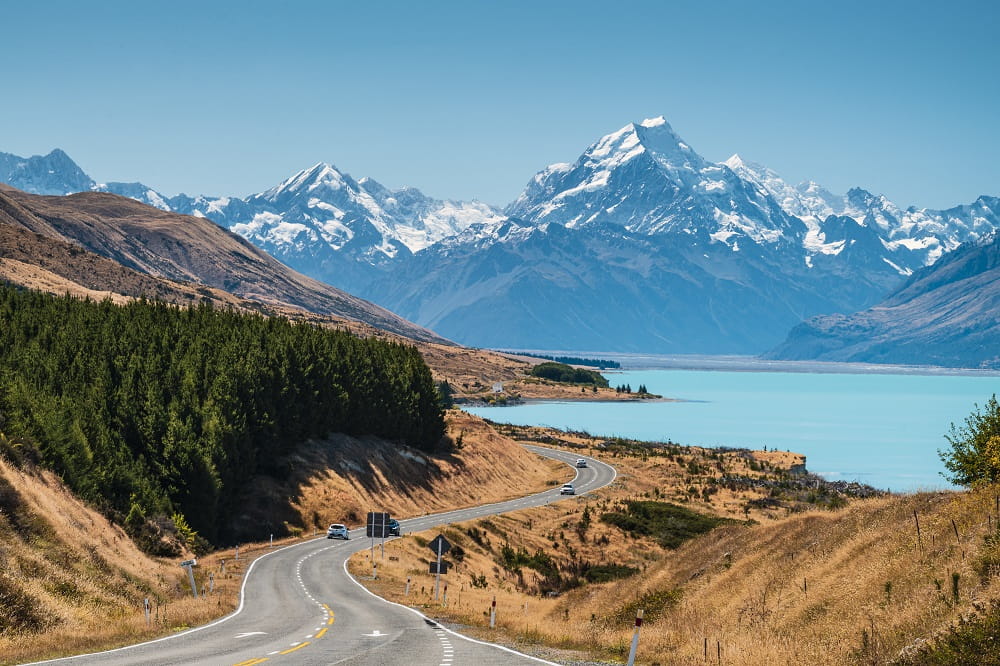
Aoraki / Mount Cook is New Zealand’s tallest peak, and the national park around it forms the backdrop for some of the country’s best known alpine scenery. The Hooker Valley Track is the most popular walk in the park, a mostly flat trail that leads to a glacial lake with the mountain rising directly behind it, and it does not require technical hiking experience to complete.
Nearby, Lake Tekapo is worth the stop for its turquoise water and for being part of the Aoraki Mackenzie International Dark Sky Reserve, one of the largest reserves of its kind in the world, where clear nights bring out a genuinely dense view of the stars. If your route allows it, staying overnight near Mount Cook rather than passing through gives you a much better chance of catching the mountain without cloud cover, since alpine weather here can change within a few hours.
South Island Destinations Worth Building a Route Around
The South Island is where most of New Zealand’s big name scenery lives, and it rewards travelers who are willing to drive. Distances on the map look short, but mountain roads and single lane bridges mean journeys usually take longer than a straight line distance would suggest.
Wānaka, Glenorchy and Arrowtown
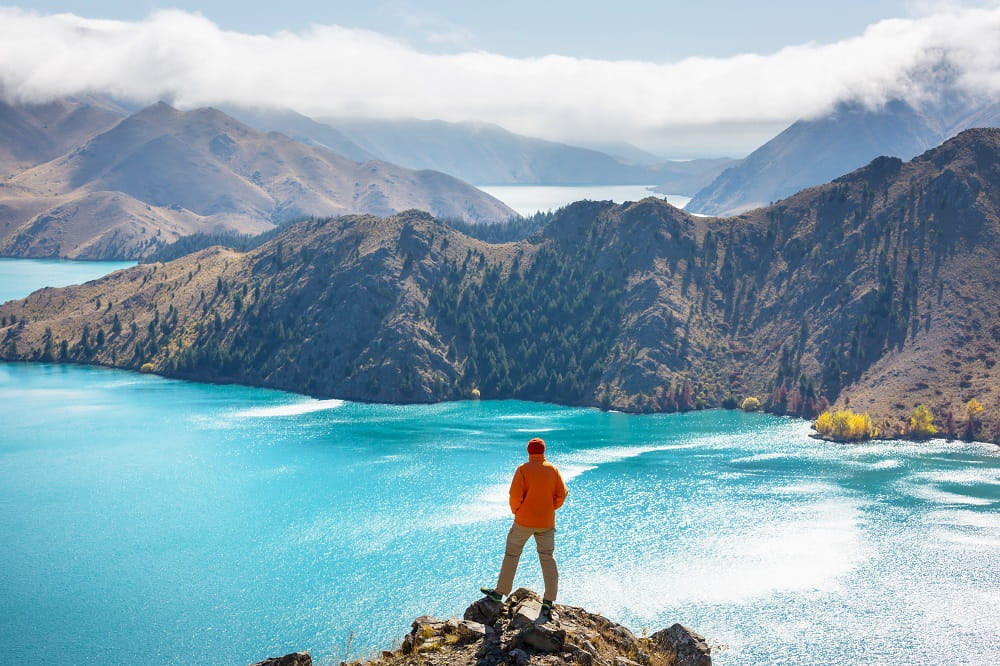
Wānaka sits on Lake Wānaka, about an hour from Queenstown, and has a quieter, more laid back feel than its busier neighbor. The climb up Roy’s Peak is the main draw for hikers, offering panoramic views over the lake, though it is a full day walk and gets busy in summer.

Image source: Pexels
Glenorchy, a short drive from Queenstown along the lake edge, is the gateway to some of the region’s most dramatic scenery and the starting point for the Routeburn Track, one of New Zealand’s Great Walks. Arrowtown, a former gold mining town near Queenstown, is worth an hour or two for its heritage buildings and autumn colors if you are visiting in April or May.
Abel Tasman National Park and Marlborough Sounds
Abel Tasman National Park, at the top of the South Island, is known for golden sand beaches, clear water and a coastal walking track that ranks among the country’s most accessible Great Walks. Kayaking along the coastline here is one of the more relaxed ways to see the park, and it suits travelers who want scenery without a demanding hike.
Close by, the Marlborough Sounds offer a maze of drowned valleys and quiet bays, and the region doubles as New Zealand’s best known wine country, centered on Marlborough’s sauvignon blanc. This part of the South Island connects to the North Island through the Cook Strait ferry, which runs between Picton and Wellington and takes around three to three and a half hours.
Franz Josef and Fox Glacier, Punakaiki and the West Coast
The West Coast is wetter, wilder and far less crowded than the Queenstown side of the South Island, and that is part of its appeal. Franz Josef Glacier and Fox Glacier sit close together and both offer valley walks to viewpoints, plus helicopter access for travelers who want to get onto the ice itself.

Image source: Pexels
Further north, Punakaiki, home to the Pancake Rocks, is a short but worthwhile stop where layered limestone formations meet blowholes that perform best around high tide. The drive along this stretch of coast is one of the more scenic and least crowded routes in the country, though weather can close roads here more often than elsewhere, so it is worth checking conditions before you set out.
Kaikōura and Central Otago Wine Country
Kaikōura, on the east coast between Christchurch and Picton, is New Zealand’s best known spot for whale watching, thanks to a deep underwater canyon close to shore that draws sperm whales year round. Dolphin swimming and seal colonies add to the wildlife draw, and the town makes a natural stopping point if you are driving between Christchurch and the top of the South Island.
Central Otago, inland from Queenstown around Cromwell and Bannockburn, is New Zealand’s warmest, driest wine region and produces some of its best pinot noir. It pairs naturally with a Queenstown or Wānaka based itinerary, since it sits within an hour’s drive of both.
Doubtful Sound and Te Anau
Te Anau is the main gateway town for Fiordland National Park and a practical base for both Milford Sound and Doubtful Sound, also known as Patea. Doubtful Sound sees a fraction of Milford’s visitor numbers because it takes more effort to reach, involving a boat crossing and a coach ride over Wilmot Pass, but that effort is exactly why many travelers who make it out say it feels more remote. If you have time for only one fiord, Milford is more accessible. If you have an extra day and want fewer other boats around you, Doubtful Sound is worth the detour.
North Island Destinations Worth Building a Route Around
The North Island trades the South Island’s high alpine drama for volcanic scenery, geothermal country and a longer coastline of beaches and harbors. It also holds most of New Zealand’s population and its largest cities, which makes logistics generally easier here than in the south.
Tongariro National Park and the Tongariro Alpine Crossing
Tongariro National Park, a UNESCO World Heritage site, is home to Mount Taranaki’s volcanic cousins and to the Tongariro Alpine Crossing, widely regarded as one of the best one day hikes in the world. The full crossing covers volcanic craters, emerald colored lakes and steaming vents over around 19.4 kilometers, and it needs a full day, good weather and a reasonable level of fitness.
This is not a walk to attempt in poor visibility or high wind, since the exposed alpine sections can become dangerous quickly. Checking the Department of Conservation’s current track and weather advisories before you go is standard practice here, not an optional extra.
Waitomo Caves and Hobbiton

Photo: Elijah Cobb / Pexels
Waitomo Caves, a couple of hours south of Auckland, are known for glowworms that light up the cave ceilings in a way that is genuinely hard to photograph but memorable to see in person. Black water rafting tours here combine caving with a short float through the glowworm chambers for travelers who want something more active than a standard walking tour.
Nearby, Hobbiton draws Lord of the Rings and Hobbit fans to the film set built into rolling farmland near Matamata. It is a popular add on for travelers driving between Auckland and Rotorua, and booking a tour slot in advance is worth doing in peak season.
Coromandel Peninsula, Cathedral Cove and Raglan
The Coromandel Peninsula, a short drive southeast of Auckland, offers some of the North Island’s best beaches along with quieter, more forested inland roads. Cathedral Cove, reached by a walking track or by boat, is the peninsula’s best known spot, a natural rock archway opening onto a white sand beach.
On the west coast, Raglan is New Zealand’s best known surf town, with a laid back pace that suits travelers looking to slow down for a day or two rather than tick off sights. The two coasts of the Coromandel and Raglan area feel different enough that pairing them, if your route allows, gives a good sense of how varied the North Island’s coastline actually is.
Napier / Hawke’s Bay, Lake Taupō and Huka Falls
Napier, in the Hawke’s Bay region, is known for its Art Deco architecture, largely the result of a rebuilding effort after a major 1931 earthquake, and for the wine country surrounding it. It sits a little off the main Auckland to Wellington route, which keeps it quieter than some of the North Island’s more heavily visited stops.
Lake Taupō, New Zealand’s largest lake, formed in the crater of a supervolcano, and it makes a natural halfway stop between Rotorua and Wellington. Just north of the lake, Huka Falls is a short, easy stop where the Waikato River is forced through a narrow rock channel, dropping in volume and speed that is more dramatic in person than photos usually suggest.
Waiheke Island, Tiritiri Matangi and Poor Knights Islands
These three island destinations sit off Auckland’s coast and reward travelers who have an extra day or two before heading south. Waiheke Island is the easiest to reach, a 40 minute ferry from downtown Auckland, and combines vineyards with beaches in a way that suits a relaxed day trip. Tiritiri Matangi offers a genuinely different experience, a predator free island sanctuary where native birds like the takahē and kōkako can be seen at close range.

Image source: Pexels
Further north, the Poor Knights Islands, off the coast near Tutukaka, are considered one of the best diving and snorkeling spots in the country, with warm currents supporting marine life rarely found this far south in the Pacific.
Nature, Hiking and Adventure Across New Zealand
New Zealand’s national parks and coastline are the reason most people build a trip around driving rather than flying between cities. This section covers the walking tracks and outdoor activities that come up again and again in trip planning.
The Great Walks of New Zealand
New Zealand's Department of Conservation manages ten official Great Walks, plus the newer Tuatapere Hump Ridge Track, which joins the network but is booked separately through the Hump Ridge Trust rather than DOC's main system. Together these multi day tracks combine huts or campsites with some of the country's most consistent scenery. The Milford Track, the Routeburn Track and the Kepler Track, all based around Fiordland and Queenstown, are the most sought after, and booking for the main summer season typically opens the previous May, with popular tracks filling within days.
Pro tip: if your preferred Great Walk is fully booked, most of these tracks can still be walked as shorter day sections without booking a hut, which is a practical way to experience the same scenery on a tighter schedule.
Beyond the Great Walks, shorter tracks like the Hooker Valley Track near Aoraki / Mount Cook and the Tongariro Alpine Crossing give you similar scenery in a single day, which suits most first time visitors better than a multi day commitment.
Scenic Drives, Skiing and Wildlife Encounters
New Zealand’s scenic drives are arguably as much of a draw as its hiking trails. Routes through the Southern Alps, along the West Coast, and across the Central Otago high country regularly rank among the best road trip routes in the world, precisely because so much of the scenery is visible from the car itself.
Winter (June to September) turns the Queenstown and Wānaka area into New Zealand’s main skiing region, with several major fields within an hour of town. Summer, by contrast, is peak season for whale watching at Kaikōura, kayaking in Abel Tasman, and general wildlife encounters, including seal colonies, dolphins and some of the world’s rarest penguin species along both coasts.
Planning a New Zealand Road Trip and Itinerary
How Many Days Do You Need to See New Zealand Properly
You need at least two weeks to see New Zealand properly, and three weeks gives you a far more comfortable pace. In ten days or less, most travelers end up choosing one island rather than trying to cover both, because the driving distances and ferry crossing eat into sightseeing time faster than expected.
A common mistake is treating New Zealand like a country you can circle in a week because it looks compact on a map. In practice, winding roads, one lane bridges and weather delays mean a 300 kilometer drive can easily take five or six hours, not the three you might expect on a straight highway.
A Realistic First Time New Zealand Itinerary (Two Weeks)
Here is a straightforward two week structure that many first time visitors use as a starting point, adjusting the order depending on which island they land in first.
Days 1 to 2, Auckland: Settle in, adjust to the time zone, and add a day trip to Waiheke Island if you have the time.
Days 3 to 4, Rotorua: Geothermal sights, a cultural evening, and a stop at Hobbiton on the way through if it fits your route.
Days 5 to 6, Taupō and Tongariro: Huka Falls, and the Tongariro Alpine Crossing if the weather cooperates.
Day 7, fly or ferry south: Either fly into Christchurch or Queenstown, or continue overland via the Cook Strait ferry if you want to see Wellington and Marlborough along the way.
Days 8 to 10, Queenstown, Wānaka and Milford Sound: Base yourself in Queenstown or Wānaka, and build in an overnight in Te Anau before your Milford Sound day.
Days 11 to 12, Aoraki / Mount Cook and Lake Tekapo: Drive north via Lindis Pass, with the Hooker Valley Track and a night under the Dark Sky Reserve.
Days 13 to 14, Christchurch: Wind down and prepare for departure, or extend into the West Coast if you have an extra two or three days to spare.
This is a starting framework, not a fixed script. Swap in Abel Tasman, Kaikōura or the Coromandel if beaches and coastline matter more to you than alpine scenery, and cut a region entirely if fourteen days is genuinely all you have.
Car Rental, Driving Rules and What to Know Before You Go
New Zealand drives on the left, which catches out visitors from the United States, mainland Europe and much of Asia in the first day or two behind the wheel. Speed limits are lower than many visitors expect on rural roads, generally 100 kilometers per hour, and are strictly enforced with speed cameras in many areas.
Most rental companies require an internationally recognized driving license, and travelers from countries whose license is not in English typically need an international driving permit alongside it. If you are new to driving on unfamiliar roads generally, it is worth checking driving in New Zealand before you land, since road conditions, one lane bridges and gravel sections on some rural routes are different from what many visitors are used to at home.
Expert insight: call this the 100 kilometer reality check. Before you commit to a day’s driving plan, check the route on a map app that accounts for New Zealand’s mountain roads, not just straight line distance. A 100 kilometer stretch through flat farmland might take an hour. The same distance through Fiordland or the West Coast can take two and a half.
If you are flying into the South Island, Christchurch is the main gateway, and picking up a car at Christchurch International Airport car rental puts you within a comfortable first day’s drive of Kaikōura, the Southern Alps or the West Coast, depending on which direction you head. For the trip as a whole, most self drive visitors find it worth comparing options to rent a car in New Zealand before arrival rather than booking on the spot, since availability tightens considerably in the December to February peak season. It is also worth checking mileage limits and rental car insurance details before you book, since a long South Island loop can easily cover 2,000 kilometers or more.
Alternatives exist if you would rather not drive. InterCity buses connect most major towns and cities, and are a workable option for travelers on a tighter budget or without a license, though they take considerably longer than a self drive route and run on fixed schedules that limit spontaneous stops.
New Zealand Travel Checklist: What Not to Miss
The Three Hub Framework is a simple way to structure a New Zealand trip without overplanning it. Treat Auckland, Queenstown and Christchurch as your three practical hubs, build two or three day loops out from each one, and let the drive time between hubs set the outer limit of how much you can realistically fit in.
Before you go, work through this shortlist:
Confirm which season you are traveling in, since New Zealand’s seasons are reversed from the Northern Hemisphere and December through February is both summer and peak season
Check Great Walks and popular hut bookings early if hiking is a priority, since the main season fills up months in advance
Pack for four seasons in one day, especially in Fiordland and the Southern Alps, where weather changes quickly regardless of the forecast
Sort out your international driving permit and rental car booking before you land rather than on arrival
Build in at least one buffer day for weather delays, particularly around Milford Sound and the West Coast
North Island vs South Island: Which Should You Visit First

Image source: Pexels
There is no single correct answer to whether the North Island or South Island comes first, but the choice does change the shape of your trip. The North Island generally suits travelers most interested in geothermal country, Māori cultural experiences and a mix of cities and beaches, with somewhat easier logistics thanks to better roads and shorter driving distances between stops. The South Island suits travelers chasing the biggest mountain, fiord and glacier scenery, at the cost of longer drives and, in places, a shorter tourist season.
If your international flight lands in Auckland, following the natural south moving route through Rotorua, Taupō and Wellington before crossing the Cook Strait ferry to the South Island tends to work well. If you land in Christchurch or Queenstown instead, doing the South Island first and flying north to finish in Auckland avoids doubling back on yourself.
Lake Taupō vs Lake Wānaka: Which Should You Visit
Lake Taupō, on the North Island, is New Zealand’s largest lake and sits within easy reach of Rotorua, Huka Falls and the Tongariro Alpine Crossing, which makes it a practical stop on a North Island loop rather than a standalone destination. Lake Wānaka, on the South Island, has a more dramatic mountain backdrop and functions as both a scenic stop and a base for hiking Roy’s Peak, closer in character to Queenstown than to a typical North Island lake town. If your route only includes one island, the choice largely makes itself. If you are visiting both, they serve different purposes rather than competing with each other.
Mount Cook National Park: Is It Worth the Trip
Yes, Aoraki / Mount Cook National Park is worth the trip for most travelers, particularly if you can spend a night there rather than passing through. The detour off the main Queenstown to Christchurch route adds a couple of hours each way, but the Hooker Valley Track and the Dark Sky Reserve views are hard to replicate elsewhere on the South Island. Travelers on a very tight schedule who have already built in Milford Sound and the glaciers sometimes choose to skip it, and that is a reasonable tradeoff if time genuinely does not allow for both.
Frequently Asked Questions
What are the best places to visit in New Zealand for first time visitors?
For a first visit, Queenstown, Milford Sound, Aoraki / Mount Cook and Rotorua give the clearest sense of what makes New Zealand distinctive. Add Auckland at the start or end of your trip for logistics, and Abel Tasman or the Coromandel if beaches matter to you as much as mountains.
How many days do you need to see New Zealand properly?
Two weeks is a reasonable minimum, and three weeks lets you travel at a more comfortable pace. Fewer than ten days generally means choosing one island rather than covering both, since driving distances and the Cook Strait ferry crossing take up more time than the map suggests.
Is Aoraki / Mount Cook National Park worth the trip?
Yes, for most travelers it is worth the detour, especially if you can stay overnight rather than pass through. The Hooker Valley Track and the Aoraki Mackenzie Dark Sky Reserve are genuinely hard to replace elsewhere on the South Island.
What should you know before traveling to New Zealand?
New Zealand drives on the left, has a reversed seasonal calendar to the Northern Hemisphere, and its rural roads often take longer to drive than the distance suggests. Most visitors also need an international driving permit alongside their home license to legally drive a rental car.
What are the most beautiful parts of New Zealand?
Fiordland, including Milford Sound and Doubtful Sound, and the Aoraki / Mount Cook region are generally considered the most dramatic scenery on the South Island. On the North Island, Tongariro National Park’s volcanic scenery and the Coromandel Peninsula’s coastline are the most frequently mentioned standouts.
What is the best time of year to travel to New Zealand?
December through February is New Zealand’s summer and its busiest, most expensive travel season. March to May and September to November offer a good balance of decent weather and smaller crowds, while June through September suits travelers prioritizing skiing over hiking.
Which hiking trails should you prioritize in New Zealand?
The Tongariro Alpine Crossing and the Hooker Valley Track are the best single day hikes for most visitors, needing no multi day booking. If you have more time, the Milford, Routeburn and Kepler Great Walks are the most rewarding multi day options, though they need booking months ahead.
Should you visit the North Island or South Island first?
Visit whichever island your international flight lands in first, then move in one direction rather than backtracking. The North Island suits travelers prioritizing geothermal and cultural experiences, while the South Island suits those chasing mountains, fiords and glaciers.
How long should you stay in each New Zealand city or town?
Auckland and Rotorua generally need one to two nights each, Queenstown and Wānaka benefit from two to three nights given how much sits nearby, and smaller stops like Kaikōura, Punakaiki or Lake Tekapo work well as a single overnight on the way through.
What is the difference between Milford Sound and Doubtful Sound?
Milford Sound is far more accessible by road and sees significantly more day visitors, while Doubtful Sound requires a boat crossing and coach transfer, which keeps visitor numbers lower. Choose Milford if time is limited, and Doubtful Sound if you have an extra day and want a quieter fiord experience.
Conclusion
The best places to visit in New Zealand span two very different islands, and trying to see everything on a short trip usually means seeing very little of it properly. Queenstown, Milford Sound and Aoraki / Mount Cook anchor a South Island route built around mountains and fiords, while Auckland, Rotorua and Tongariro anchor a North Island route built around geothermal country and coastline. Whichever mix you choose, giving yourself realistic driving time between stops matters more than squeezing in one extra destination.
Next steps:
Pick your entry island based on where your flight lands, then build your route in one direction
Book any Great Walks or high demand accommodation as early as your dates allow
Sort your international driving permit and rental car before you arrive, so your first day isn’t spent on logistics
If you are planning a self drive trip, FinalRentals offers rental car options across New Zealand, including pickup at Christchurch International Airport, with transparent terms that are worth reviewing before you travel. You can book affordable car rental with FinalRentals as part of your planning, alongside the driving and insurance guides linked throughout this article.
Author Bio
Jean Genevieve is a travel and car rental content specialist focused on practical guidance for international travelers, with particular attention to rental requirements, road conditions, driving rules and self drive trip planning. This article draws on official sources including Stats NZ, the New Zealand Department of Conservation and Tourism New Zealand, alongside FinalRentals’ own car rental and driving guides for New Zealand. It is reviewed periodically and updated when official guidance, road conditions or booking rules change.
Sources and Methodology
This guide was compiled from publicly available official and industry sources, checked at the time of writing. Figures are cited with their original reporting period rather than restated as current unless confirmed. Destination information reflects publicly available Department of Conservation and Tourism New Zealand guidance current as of September 2026.
Stats NZ international visitor arrivals data, as reported via the New Zealand Government’s tourism ministry statements, year to December 2025
New Zealand Department of Conservation, Great Walks booking information, 2026/27 season
Tourism New Zealand, official Great Walks and destination guidance