Is Driving in New Zealand Hard for First Time Visitors?
September 16th 2026
Driving in New Zealand is manageable for most first time visitors, including Americans, Canadians and Europeans used to driving on the right.
The adjustment to left side driving usually settles within the first hour or two behind the wheel.
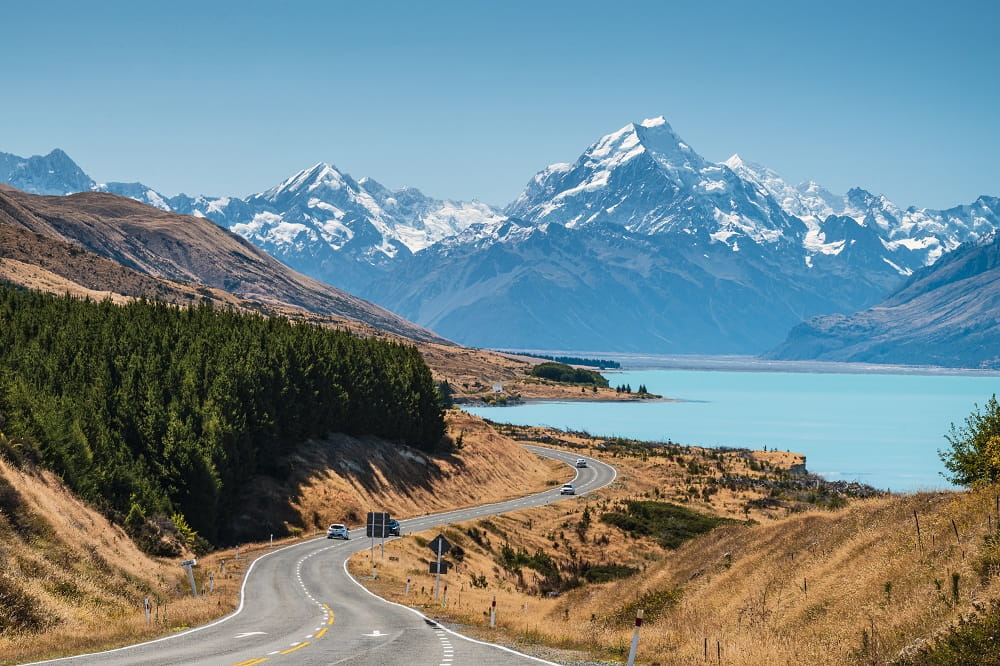
The bigger challenge is the terrain: narrow, winding roads, one lane bridges, changeable weather and travel times that run longer than the map suggests.
A valid overseas licence covers driving in New Zealand for up to 18 months from your last arrival date, shortening to 12 months from 1 November 2026.
Key Takeaways
New Zealand drives on the left, with roundabouts moving clockwise and give way rules that catch out first time visitors at intersections.
You can currently drive on a valid overseas licence for up to 18 months after arrival, but this changes to 12 months from 1 November 2026.
An International Driving Permit is only required if your licence is not printed in English, though many rental desks ask for one anyway during peak season.
The open road speed limit is 100 km/h, but rural New Zealand roads rarely let you hold that speed for long.
One lane bridges, gravel shoulders and sudden weather changes are bigger practical hazards than the side of the road you drive on.
Christchurch Airport is the main gateway for South Island road trips and a common starting point for first time self drive visitors.
Table of Contents
What Is It Actually Like to Start Driving in New Zealand?
Do I Need an International Driving Permit for New Zealand?
Can I Drive in New Zealand with a US Driver's Licence?
What Are New Zealand's Key Road Rules and Speed Limits?
Is Driving in New Zealand Difficult for Americans and Other Right Side Drivers?
What Should I Know About One Lane Bridges and Narrow Roads?
North Island or South Island: Which Should You Drive First?
What Documents and Insurance Do I Need to Rent a Car?
Common Mistakes First Time Visitors Make While Driving in New Zealand
Frequently Asked Questions
Final Thoughts
What Is It Actually Like to Start Driving in New Zealand?
Driving in New Zealand means keeping to the left side of the road, with the driver's seat closest to the centre line and oncoming traffic passing on your right. If you normally drive on the right, the first few minutes out of the rental car depot are the strangest part of the whole trip. Roundabouts move clockwise instead of anticlockwise, and your instinct to check your mirror or reach for the indicator can feel backwards for a day or two.
Most visitors describe the same pattern. The first ten minutes feel awkward. By the end of the first hour, checking the centre line and glancing left before a turn becomes automatic. The moments that catch people out are not long stretches of open highway. They are car parks, quiet residential streets, and the first roundabout after landing, when jet lag and unfamiliar signage combine at exactly the wrong time.

If you are coming straight from a long haul flight into Auckland or Christchurch, consider a short buffer before you collect your keys. A coffee, a walk around the terminal, or even a night near the airport before a long drive can matter more than any road rule. Fatigue on the day of arrival is a recurring factor that New Zealand Police cite in reports on crashes involving visiting drivers.
Do I Need an International Driving Permit for New Zealand?
You need an International Driving Permit for New Zealand only if your overseas licence is not printed in English. If your licence is in English, such as a standard United States, Canadian, British or Australian licence, you can drive on it directly, provided you carry the physical card with you at all times.
Where this gets confusing is at the rental counter rather than on the road. NZ Transport Agency Waka Kotahi, the government body responsible for the road rules, does not require an IDP from English speaking visitors. Some rental companies ask for one anyway, particularly at busy South Island hubs like Queenstown during the December to March summer season, simply to keep the paperwork consistent at a high volume desk. Depending on the provider and the season, it can be worth carrying an IDP even when the law does not strictly require it, since it removes any argument at pickup.
If your licence is not in English, you have two options. You can carry an accurate English translation from an approved source, or you can get an International Driving Permit before you leave home. An IDP cannot be issued once you have already arrived in New Zealand, so this is one document to sort out before departure rather than after.
Can I Drive in New Zealand with a US Driver's Licence?
Yes, a valid United States driver's licence lets you drive in New Zealand without a permit or translation, since it is already printed in English. Waka Kotahi currently allows visitors to drive on a valid overseas car licence for up to 18 months from the date they last entered the country.
That window is changing. According to NZ Transport Agency Waka Kotahi, the current 18 month allowance for overseas car licences reduces to 12 months from 1 November 2026, and the clock resets each time a visitor leaves and re enters the country. For a typical two to three week holiday this change makes no practical difference at all. It matters more for people on longer working holiday visas, extended sabbaticals, or multi month campervan trips who might otherwise plan on the older 18 month figure.
You must carry your physical licence any time you are driving. A photo on your phone is not treated as valid proof if you are stopped by police or asked for it during an accident report. Your licence also needs to remain current and free of any suspension or disqualification, whether that happened overseas or in New Zealand.
What Are New Zealand's Key Road Rules and Speed Limits?
New Zealand's default speed limits are 50 km/h in towns and cities and 100 km/h on the open road, with lower posted limits through roadworks, school zones and known high risk sections of rural highway. These numbers look simple on paper. What surprises first time visitors is how rarely the open road limit is actually achievable.

A 100 km/h sign does not mean the road is straight and fast. Many state highways alternate between short straights and tight bends within a few hundred metres, so average speeds on rural routes often sit closer to 70 to 80 km/h once you account for corners, stock crossings and one lane bridges. Google Maps and similar apps generally handle this reasonably well, but it still catches people out on longer South Island legs, where 300 kilometres on the map can mean four hours or more behind the wheel.
The give way rule is the other detail worth understanding before your first intersection. At most uncontrolled intersections and roundabouts, you give way to traffic approaching from your right. This is the reverse of what right side driving countries are used to, and it takes conscious thought for the first day or two.
Other rules that matter for visitors:
Seat belts are compulsory for every seat, front and back, for the whole journey, not just at the start.
Using a handheld phone while driving, including to read a text message, is illegal.
The legal blood alcohol limit is 0.05 percent for drivers aged 20 and over, and zero for drivers under 20.
If several vehicles queue behind you on a narrow road, New Zealand law requires you to pull over where safe and let them pass rather than holding up traffic indefinitely.
Pro Tip
Build in an extra hour for every three to four hours of planned South Island driving, especially on routes like the Crown Range Road, Milford Road or the drive around Lake Tekapo toward Mount Cook. Photo stops, single lane sections and weather delays add up faster than most itineraries assume.
Is Driving in New Zealand Difficult for Americans and Other Right Side Drivers?
Driving in New Zealand is not considered difficult for Americans in terms of the physical skill involved, but it does require sustained attention during the first day, especially at intersections, roundabouts and when reversing out of car parks. The mechanics of steering and braking do not change. What changes is a set of instincts you have built over years of driving, and instincts take longer to update than knowledge does.
The Left Lane Adjustment Ladder is a simple way to think about the first day of a New Zealand road trip.
Step 1, low stakes driving: Start with a short, quiet drive from the rental depot, ideally somewhere without heavy traffic, to get used to the width of the car and the position of the wheel on the right hand side of the dashboard.
Step 2, first roundabout: Take your first roundabout slowly. Look right before entering, travel clockwise, and do not worry if you miss your exit and go around again. This is common enough that nobody behind you will think twice about it.
Step 3, first real drive: Once the low stakes stretch feels comfortable, move on to a longer highway leg. By this point the give way rule and lane position should feel closer to automatic.
This is one of those things that looks simple on a map but feels different behind the wheel. The good news is that the adjustment period is short. Most visitors report feeling settled by the end of the first full driving day, and confident by day two or three.
What Should I Know About One Lane Bridges and Narrow Roads?

One lane bridges are single lane crossings shared by traffic travelling in both directions, common across rural New Zealand and particularly on South Island routes like the West Coast and parts of Fiordland. A sign before the bridge shows which direction has priority, marked with a large arrow. If the arrow points toward you, you have the right of way. If it points away from you, you give way and wait for oncoming traffic to clear first.
The One Lane Bridge Protocol breaks this down into three checks.
Read the sign early: Approach signs appear well before the bridge itself, giving you time to slow down and check which direction has priority.
Check for oncoming traffic: Even with priority, slow down. Farm vehicles, cyclists and other tourists do not always read the sign correctly.
Do not stop on the bridge: If you realise too late that you should have given way, it is safer to continue through smoothly than to stop halfway across.
Narrow, winding roads extend beyond bridges. Many rural highways have gravel shoulders, minimal lighting and no barrier between the road and a drop on one side, particularly through mountain passes. Slow down earlier than feels necessary, use passing lanes when they appear rather than attempting to overtake on a blind corner, and pull over at a marked bay if a queue builds behind you.
Night driving deserves its own mention. Visibility drops fast once you are away from town, and livestock, particularly sheep and cattle being moved along rural roads, can appear with little warning. Where possible, plan longer rural legs for daylight hours.
North Island or South Island: Which Should You Drive First?
Factor | North Island | South Island |
|---|---|---|
Main gateway airport | Auckland | Christchurch or Queenstown |
Typical road character | Wider highways, more traffic near cities | Narrower, more one lane bridges and mountain passes |
Signature drives | Auckland to Bay of Islands, Coromandel Peninsula | Christchurch to Queenstown via Lake Tekapo and Mount Cook |
Winter driving considerations | Snow mainly limited to the central plateau | Snow chains and alpine conditions common on routes like Crown Range Road |
Best suited to | First time visitors easing into left side driving | Visitors comfortable with mountain roads and longer rural legs |
Neither island is objectively harder to drive. The North Island tends to have busier city traffic around Auckland, while the South Island has more mountain passes, longer distances between towns and a higher concentration of one lane bridges. Many first time visitors choose to start their trip on the North Island, settle into left side driving in a slightly more forgiving environment, then fly into Christchurch for the South Island leg once they feel comfortable.
If Queenstown, Milford Road, Lake Tekapo or Mount Cook are on your list, collecting your rental car at Christchurch Airport is the practical starting point for a South Island loop, since it sits within easy reach of State Highway 1 and the inland routes toward the Southern Alps.
What Documents and Insurance Do I Need to Rent a Car?
To rent a car in New Zealand, you typically need a valid overseas driver's licence, a credit card in the driver's name for the security deposit, and proof of your travel dates. Most rental companies set a minimum age of 21, with a young driver surcharge often applying under 25, though this varies by provider and vehicle class. You can compare current options and book affordable car rentals for your New Zealand trip with FinalRentals once you know your route and dates.

Rental car insurance in New Zealand usually comes in layers. A base policy from the rental company reduces your liability for damage down to an excess amount, and you can often reduce that excess further with an additional daily fee. Some visitors also check whether their credit card or a standalone travel insurance policy already covers rental car excess before paying for the rental company's own cover twice. Because these terms vary between rental agreements, it is worth reading the specific policy on your booking rather than assuming standard terms apply.
Common Mistakes First Time Visitors Make While Driving in New Zealand
Underestimating travel time: Distances on a map do not account for winding roads, one lane bridges or photo stops, so a 200 kilometre drive can easily take three and a half hours.
Driving tired after a long flight: Jet lag combined with an unfamiliar side of the road is a common factor in single vehicle crashes involving visitors during their first day.
Ignoring the give way rule at intersections: Habit from right side driving countries means some visitors instinctively look left first instead of right.
Not allowing traffic to pass: On narrow rural roads, a line of frustrated vehicles behind you is a sign to pull over at the next safe bay, not to speed up on a blind corner.
Skipping winter preparation: Visitors driving South Island alpine routes between June and September sometimes underestimate the need for snow chains or suitable tyres.
Frequently Asked Questions
Can I drive in New Zealand with a foreign licence?
Yes, a valid overseas driver's licence lets you drive in New Zealand for up to 18 months from your last date of arrival, reducing to 12 months from 1 November 2026. The licence must remain current and free of suspension or disqualification during that period.
Do I need an international driving permit for New Zealand as a tourist?
An International Driving Permit is only legally required if the overseas licence is not printed in English. Visitors from English speaking countries such as the United States, Canada, the United Kingdom and Australia can generally drive on their home licence alone, though some rental desks request an IDP regardless.
Is driving in New Zealand difficult for first time visitors?
Driving in New Zealand is not considered technically difficult, but it requires focus during the first day for left side driving, give way rules and unfamiliar road signs. Most visitors report feeling comfortable by the end of day one and confident within two to three days.
What side of the road does New Zealand drive on?
New Zealand drives on the left side of the road, with roundabouts moving clockwise and give way to traffic approaching from the right at most uncontrolled intersections.
What is the speed limit in New Zealand?
The default speed limit is 50 km/h in urban areas and 100 km/h on the open road, with lower posted limits through roadworks, school zones and certain high risk rural sections.
How long does it take to drive around New Zealand?
Driving times in New Zealand run longer than distance alone suggests, since winding roads, one lane bridges and mountain passes slow average speeds. A 300 kilometre South Island leg, such as Christchurch to Queenstown, commonly takes around 4 hours or more without stops.
What are one lane bridges and how do they work?
One lane bridges are single lane river or gorge crossings shared by traffic in both directions, marked with a priority sign showing which direction gives way. Drivers without priority slow down and wait for oncoming traffic before crossing.
Is it safe to drive alone in New Zealand as a solo traveller?
Solo driving in New Zealand is common and generally considered safe on main routes, though fatigue, changeable weather and remote sections with limited phone coverage are worth planning around, particularly on the West Coast and around Fiordland.
Can someone else drive my rental car in New Zealand?
Only drivers listed on the rental agreement are covered to drive the vehicle. Adding an additional driver at the counter, where the rental company allows it, is the safer route rather than letting an unlisted person take the wheel.
What happens if I get a speeding ticket in a rental car in New Zealand?
Speeding fines issued to a rental vehicle are generally passed on to the driver named on the rental agreement, often with an administration fee added by the rental company. Depending on the provider's terms, this can be charged directly to the card on file.
Final Thoughts
Driving in New Zealand comes down to two separate adjustments. The first, switching to the left side of the road, usually fades within a day. The second, respecting narrow roads, one lane bridges and travel times that run longer than expected, matters for the whole trip. Visitors who plan realistic daily distances, check the current licence rules before departure, and treat give way signs and one lane bridges with a bit of caution tend to come away from a New Zealand self drive holiday having enjoyed the driving as much as the destinations.
If you are getting ready to book, you can book a reliable car rental with FinalRentals for your New Zealand trip, and travellers starting their South Island route often begin by collecting their vehicle at Christchurch Airport before heading inland toward the Southern Alps.
Next steps:
Check your licence's remaining validity window against the 1 November 2026 rule change before you travel.
Book your rental car and confirm which insurance excess level suits your comfort with mountain and gravel roads.
Plan daily driving distances with buffer time rather than relying on map estimates alone.
About the Author
Jean Genevieve is a travel and car rental content specialist focused on practical guidance for international travelers. Her work covers rental requirements, driving regulations, road conditions, insurance considerations, and self drive planning across multiple destinations.
Sources and References
NZ Transport Agency Waka Kotahi, Time limit extended for driving on an overseas car licence, 2026.
NZ Transport Agency Waka Kotahi, Driving on New Zealand roads, visitor and overseas licence guidance, 2026.
Fact-checked against current NZTA (Waka Kotahi) guidance as of September 2026. Rental company policies mentioned are general patterns and can vary by provider, so always confirm specific terms with your rental agreement.