Driving in Chile: What Tourists Need to Know Before You Go
September 17th 2026
By Jean Genevieve
Driving in Chile is generally straightforward for foreign visitors. You can drive on your home country license if it uses the Roman alphabet, though rental companies and insurers often prefer you to also carry an international driving permit. Chile drives on the right, tolls on Santiago's urban highways are collected electronically through a TAG transponder, and speed limits run from about 50 km/h in cities to 120 km/h on the best highways. Roads between major cities are typically paved and well maintained, but once you head into Patagonia, the Atacama altiplano, or Torres del Paine, gravel and unpaved sections become common and driving demands more planning.
You might think driving in Chile is as simple as picking up a rental car and following the map. It can be, but Chile has a few surprises for first time drivers. Santiago traffic, long empty stretches, gravel roads, mountain weather, and tolls can all change the experience. Know what you are getting into before you turn the key.
In This Guide You Will Learn
Whether you need an international driving permit for driving in Chile
What documents and deposit a rental company will ask for
How Chilean tolls, speed limits, and traffic laws actually work
What the roads are like in Santiago, the Lake District, and Chilean Patagonia
How to legally cross into Argentina with a rental car
What to do if your car breaks down or you are stopped by Carabineros
Table of Contents
What Are the Requirements for Driving in Chile
Is Driving in Chile Safe
How to Prepare Your Rental Car Before Driving in Chile
Chilean Traffic Rules, Road Signs, and Speed Limits
What Chilean Roads and Road Conditions Are Actually Like
City Driving vs Rural Driving in Chile
Best Regions and Routes for a Chile Road Trip
Driving in Chilean Patagonia and Crossing Into Argentina
Safety, Breakdowns, and Practical Tips
Why Rent With Final Rentals
Frequently Asked Questions
What Are the Requirements for Driving in Chile?

Driving in Chile as a foreign tourist does not require a Chilean license. If your home country license is printed in the Roman alphabet, Chilean police and most rental desks will accept it on its own for the length of your authorized tourist stay, which is generally up to 90 days from entry. Once you exceed that window, become a resident, or hold a different visa type, your foreign license is no longer valid on its own, and Chilean law requires a locally issued license instead.
Do I Need an International Driving Permit for Chile?
An international driving permit (IDP) is not legally compulsory for tourists driving in Chile, but it is strongly recommended. The IDP is not a license itself. It is a translated, standardized version of your home license that Carabineros de Chile and rental staff can read at a glance, even if your original license is not in English or Spanish. Carrying one also removes a common point of friction with an insurance claim after an accident, since some insurers ask for it as supporting documentation even though Chilean law does not strictly require it for a short visit.
If your license already uses the Roman alphabet, an IDP mostly adds convenience rather than legal necessity. If it does not, such as a license printed in Cyrillic, Arabic, or Mandarin characters, the IDP becomes far more important, because officers and staff will have no other way to verify it on the spot. You can typically apply for an IDP through your home country's motoring association before you travel. In the United States, AAA issues one for a modest fee and it is usually processed within a few weeks, so apply for the international driving permit well before your trip rather than at the airport.
Can I Drive in Chile With a US Driver's License?
Yes. A US driver's license is accepted for tourist driving in Chile because it is printed in the Roman alphabet. Carabineros de Chile and rental companies will generally accept it alongside your passport, though an IDP is still a sensible backup for insurance purposes and for any rental company that asks for one as a matter of internal policy.
What Is the Driving Age in Chile?
The general minimum driving age in Chile is 18. Rental companies set their own, usually higher, minimum age for renters, which typically sits between 21 and 25 depending on the company and vehicle category. Drivers under 25 may also face a young driver surcharge, so check the minimum age to rent a car policy for your chosen company before booking.
Documents You Should Carry While Driving in Chile
Your valid home country driver's license
Your passport
An international driving permit, if you have one
The rental agreement and proof of insurance
A yellow reflective safety vest, which Chilean law requires in every vehicle for roadside emergencies, and which most rental companies already provide with the car
Vehicle registration documents, kept in the glove box by the rental company
Pro Tip: Take photos of every document on your phone the day you collect the car. Chilean roadside checks are usually quick and routine, but having a backup copy saves time if paperwork gets left at a hotel or misplaced during a long driving day.
Is Driving in Chile Safe?
Is driving in Chile safe? For the most part, yes, particularly by regional standards. Highways connecting major cities are modern toll roads in good condition, and Chilean drivers are generally more rule abiding than in several neighboring countries. That said, safety varies a lot depending on where and when you are driving.
Chile tightened its drink driving laws in 2012 under Law 20.580, often called the zero tolerance law, lowering the threshold for "driving under the influence" to 0.03 grams of alcohol per deciliter of blood and the threshold for legal intoxication to 0.08 grams per deciliter.1 Research analyzing the years after the law took effect found alcohol related traffic fatalities dropped by around 28 percent compared to the period before the law, based on a national database review covering 2003 to 2014.2 That single legal change is one reason many long time visitors describe driving in Santiago and on the main highway network as noticeably calmer than in some other South American capitals.
The real risk in Chile tends to concentrate in three places: aggressive lane changing in Santiago traffic, gravel and mountain roads in the south and the altiplano, and long distance fatigue on routes where towns and fuel stations can be hours apart. None of these are reasons to avoid driving in Chile. They are reasons to plan routes with realistic time budgets and to treat gravel sections with more caution than you might use at home.
How Safe Is Driving in Chile at Night?

Night driving in Chile is generally manageable on the paved highway network but is best avoided on unpaved rural roads, mountain passes, and any stretch of the Carretera Austral. Wildlife, unlit vehicles, and potholes are far harder to spot after dark, and many rural roads have no street lighting at all. If a long drive genuinely cannot be split across daylight hours, build in extra time and lower your speed rather than trying to keep pace with a daytime schedule.
How to Prepare Your Rental Car Before Driving in Chile?
The rental car you choose matters more for driving in Chile than it might for a short city trip elsewhere, because your route, the road surface, the season, and whether you plan to use remote roads should all shape the vehicle you pick.
What Documents Do I Need to Rent a Car in Chile?
Most rental companies in Chile ask for three things at minimum: a valid driver's license, a passport or national ID, and a credit card in the renter's own name with enough available credit to cover the security deposit. That hold typically runs from around USD 450 to USD 750 depending on the vehicle category, and it is usually released within a few days to a few weeks after a clean return, though the exact timeline depends on your bank and the rental company's policy.
Are Rental Cars in Chile Automatic or Manual?
Both are widely available, though manual transmission remains more common outright across the Chilean fleet, especially in economy categories. If you specifically need an automatic, request it explicitly when booking rather than assuming it will be the default, since availability can be more limited and pricier in smaller cities and airport locations outside Santiago.
Do I Need Additional Insurance When Renting a Car in Chile?
Most Chilean rental agreements include a base collision damage waiver, but it usually carries a deductible, meaning you are still financially responsible for damage up to a set amount. Reviewing your rental car insurance options before you collect the car, rather than at the counter under time pressure, generally gives you a clearer picture of what your credit card or travel insurance may already cover and what gaps are worth closing with additional coverage.
Choosing a Vehicle for Your Route
The Chile Road Readiness Ladder is a simple way to match a vehicle category to your itinerary, moving up a level for each of these that applies to your trip:
Step 1: Start with an economy or compact car if your trip stays on paved highways between Santiago, Valparaiso, and the central valley.
Step 2: Move up to a mid size sedan or SUV if you are covering long distances on Route 5 or plan to carry more luggage or passengers.
Step 3: Choose a 4x4 vehicle if any part of your route touches the Carretera Austral, Torres del Paine National Park, or the Atacama altiplano.
Step 4: Confirm high clearance and a spare tire if your route includes river crossings, washboard gravel, or remote sections with no nearby service station.
Step 5: Ask about a second spare and extra fuel containers if you are driving deep into Chilean Patagonia, where fuel stations can be well over 100 kilometers apart.
A 4x4 vehicle is not required for a Santiago to Valparaiso trip, but it becomes a genuinely practical choice, not just a nice to have, for a self drive road trip through Patagonia or the far north. Before you commit to a vehicle, also check the mileage limits on your rate, since long distance Chilean itineraries can rack up more kilometers than a typical city rental.
Expert Insight: In practice, the vehicle category matters less than tire condition and ground clearance once you leave paved roads. A worn all season tire on a gravel switchback in the Atacama altiplano is a bigger risk factor than whether your car is technically classified as a sedan or a crossover.
Chilean Traffic Rules, Road Signs, and Speed Limits
Chile driving laws follow a fairly conventional international pattern, but a few specifics catch first time visitors off guard.

What Side of the Road Does Chile Drive On?
Chile follows right hand traffic, meaning you drive on the right side of the road and overtake on the left, the same convention used in the United States and most of continental Europe. Travelers coming from the UK, Australia, Japan, or other left driving countries typically need a day or two of conscious adjustment, particularly at roundabouts and when pulling out of parking lots.
What Are the Speed Limits in Chile?
Chile's speed limits, set by the national traffic authority, are generally:
Urban areas: 50 km/h, sometimes posted lower near schools and hospitals
Rural two lane roads: 100 km/h
Freeways and dual carriageway highways: 120 km/h
These are typically the default limits unless a sign states otherwise, and posted limits should always take priority over the general rule, particularly through small towns where the limit drops sharply and enforcement tends to be stricter.
Chile's Drink Driving Limits
As covered above, Chile's zero tolerance law sets 0.03 g/dL as the threshold for "driving under the influence" and 0.08 g/dL for legal intoxication, with escalating fines, license suspension, and potential criminal penalties above those thresholds.1 The safest practical approach for a visitor is simply not to drink at all before getting behind the wheel, since the margin between the two Chilean thresholds is narrow.
Seat Belt and Child Restraint Requirements
Seat belts are mandatory for every occupant of the vehicle, front and back. Children under 4 years old are generally required to travel in an appropriate child restraint seat, and children under 12 are generally required to sit in the back seat wearing a seat belt. Rental companies can usually provide a child or booster seat if you request one in advance.
Mobile Phones, Right Turns, and Other Rules
Using a handheld mobile phone while driving is prohibited without a hands free setup. Unlike in parts of the United States, a right turn on red is not generally permitted in Chile unless a sign specifically allows it, so treat every red light as a full stop by default. Overtaking is on the left, and it is common courtesy, though not always practiced, to pull toward the shoulder on narrow rural roads to let faster traffic pass.
Are There Speed Cameras in Chile?
Yes. Fixed and mobile speed cameras operate on major highways and in urban areas, particularly around Santiago and other large cities. Camera and Carabineros checkpoint enforcement both exist, and fines are typically issued to the vehicle, meaning a rental company may pass along a citation, along with an administrative fee, after your trip if a violation is recorded during your rental period.
What Happens If You Get Pulled Over by Police in Chile?
If Carabineros de Chile stop you, stay in the vehicle unless instructed otherwise, keep your hands visible, and have your license, passport, and rental agreement ready. Traffic police checks in Chile are generally professional and routine. Fines for common infractions are usually paid later through an official channel rather than in cash on the spot, and being asked for an on the spot cash payment is not standard practice.
What Chilean Roads and Road Conditions Are Actually Like
Chile roads vary enormously depending on where you are in this famously long, narrow country. Chile has roughly 80,000 kilometers of roads nationwide, with around half of that paved and a few thousand kilometers classified as full freeways or autopistas.3
Are Chilean Roads Good Quality?
Main routes connecting major cities are generally good quality, paved, and well signposted. Highway 5, also called Ruta 5 or the Pan American Highway, runs the length of the country from Arica near the Peruvian border down to Puerto Montt, covering roughly 3,364 kilometers, and includes several tolled freeway sections, particularly around Santiago.4 Highway 68 connects Santiago to the coast at Valparaiso and is also a well maintained tolled route.
Once you leave the main trunk roads, conditions become far more route dependent. A paved highway can give way to gravel, narrow mountain roads, or long stretches with few services, particularly once you head east into the Andes Mountains, south past Puerto Montt, or into the high desert plateau of the Atacama Desert. Check conditions for your specific route before leaving rather than assuming the rest of your trip will match the smooth stretch you just drove.
Chile's Toll Roads and the TAG System
Chile toll roads operate through two different systems depending on where you are. In Santiago, the major urban highways, including Costanera Norte, Autopista Central, Vespucio Norte, and Vespucio Sur, use a fully electronic system with no cash payment option at the barrier. These roads generally require a TAG transponder, a small electronic toll tag, or an alternative video tolling arrangement, and rental companies operating in Santiago typically fit their vehicles with one. Ask your rental company how tolls are billed before you collect the car, since charges may be paid separately after your trip or added directly to your rental invoice.
Outside Santiago, on intercity routes like Route 5, tolls are usually collected at traditional booths that accept cash and cards. As of January 2026, Chile's toll operators applied a nationwide increase of 3.4 percent tied to annual inflation, which industry commentators noted was the smallest yearly increase in five years.5 A typical Route 5 South toll plaza near Santiago now runs roughly CLP 3,300 to 3,800 per crossing point for a standard car, so a longer intercity trip with several toll plazas can add up over a multi day itinerary.6
How Do I Pay Tolls on Chilean Highways?
On Santiago's TAG only highways, tolls are billed electronically through the transponder fitted by your rental company, or through a video tolling system that reads your plate and bills the rental company directly, who then passes the charge to you. On intercity toll booths, you can generally pay in cash, Chilean pesos, or by card directly at the booth, though carrying some cash for tolls is still a sensible backup on longer road trips through more rural stretches.
Gravel Roads, Unpaved Stretches, and Mountain Passes

Significant sections of road in Chile remain unpaved, particularly the Carretera Austral through northern Patagonia, roads in and around Torres del Paine National Park, and tracks across the Atacama Desert altiplano. Gravel roads demand a slower, more deliberate driving stle. Reduce speed well before curves, avoid hard braking, and give extra space to any vehicle ahead, since dust and loose stones both reduce visibility and traction. Mountain passes in the Andes can also bring sudden changes in weather, including snow and ice outside the main summer months and strong winds year round in the far south.
City Driving vs Rural Driving in Chile
What Is It Like Driving in Santiago?
Drive in Santiago and you will quickly notice it is a different experience from driving between cities. Traffic can be heavy during rush hour, lanes can change purpose during peak periods, and dedicated bus and taxi lanes run along many main roads, separated by a yellow median that private cars may not cross into. During autumn and winter, Santiago also enforces vehicle restrictions tied to the last digit of a license plate on days when pollution levels are elevated, though tourist rental vehicles are commonly exempt from this restriction if they hold a current emissions certificate, which rental companies typically confirm at pickup.
Chile Parking: What to Expect
Chile parking in city centers usually means metered street parking, paid parking lots, or valet service at hotels and restaurants. Parking meters and lot fees are typically inexpensive by North American or European standards, but illegally parked cars can be towed, particularly in central Santiago, so it is worth using a marked lot rather than guessing at street rules you are not familiar with.
Driving Between Cities and Through Rural Chile
Once you leave urban areas behind, driving becomes more about distance management than traffic navigation. Fuel stations, called bencineras or service stations, are generally frequent along Route 5 and other major corridors, but they thin out considerably on secondary roads and disappear almost entirely for long stretches in parts of Patagonia and the far north. A good general habit is to refuel whenever your tank drops below half, rather than waiting until it is closer to empty, particularly before entering any stretch flagged as remote on a map or by locals.
Pro Tip: Download offline maps for your entire route before you leave a city with reliable signal. GPS navigation apps like Google Maps and Waze generally work well in and around Santiago and other major cities, but cell service becomes patchy or disappears entirely in mountain passes, the Atacama altiplano, and long sections of the Carretera Austral.
Best Regions and Routes for a Chile Road Trip
Chile's shape, over 4,000 kilometers long and rarely more than 200 kilometers wide, makes it naturally suited to a self drive road trip, provided you pick a realistic slice of the country rather than trying to cover it end to end in one trip.
Santiago, the Central Valley, and the Coast
A short self drive loop from Santiago out to the coast near Valparaiso, or south into the central valley wine regions, is a comfortable introduction to driving in Chile, staying almost entirely on paved, well signposted roads with frequent services.
The Atacama Desert and the North
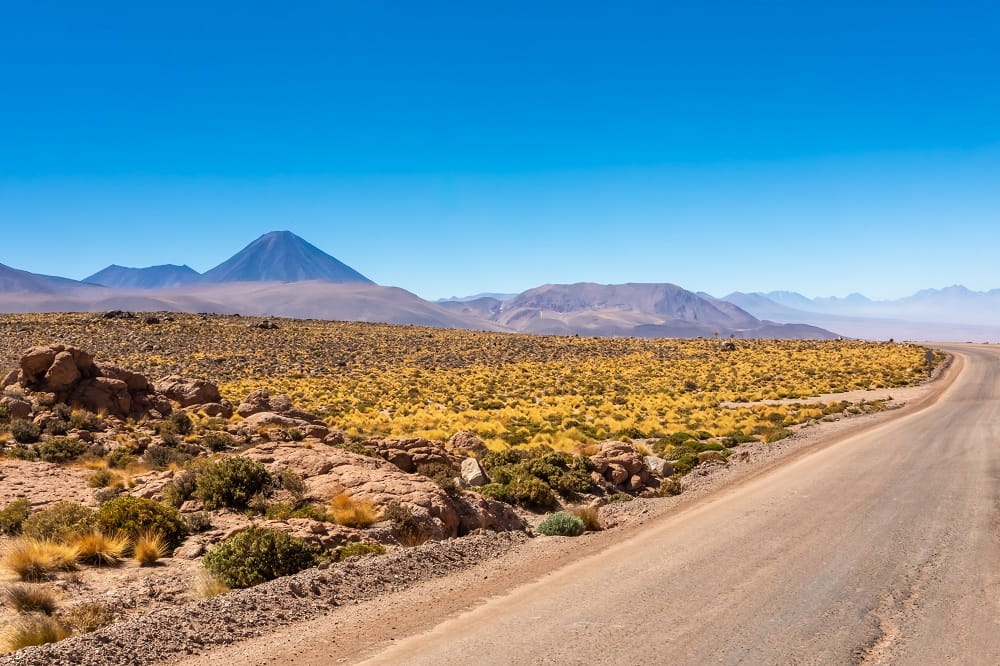
The Atacama Desert offers dramatic high altitude scenery, salt flats, and geysers, but many of the most scenic side roads are unpaved. A 4x4 is a sensible choice here, along with extra water and fuel, since distances between towns can be considerable and services are sparse away from the main tourist hubs.
Pucon, the Lake District, and Puerto Varas
Around Pucon and the towns of Puerto Varas and Puerto Montt, roads are generally well maintained and the driving is scenic rather than technical, winding past volcanoes and lakes. This region also serves as the natural gateway south, and travelers flying into Puerto Montt to start a Patagonia trip can arrange an El Tepual International Airport car rental directly on arrival rather than driving a rental car down from Santiago first.
The Carretera Austral and Chilean Patagonia

Route 7, better known as the Carretera Austral, runs roughly 1,240 kilometers from Puerto Montt south to Villa O'Higgins through some of the most remote and scenic terrain in Chilean Patagonia, passing near Coyhaique, Puerto Natales, and the fjords of the southern coast.7 The route includes at least three ferry crossings, including a roughly five hour crossing between Hornopiren and Caleta Gonzalo, and large sections remain unpaved gravel, especially the further south you travel.7 Distances between fuel stations and services can stretch well beyond 100 kilometers in places, so route planning here is less about scenery selection and more about logistics.
Torres del Paine, Puerto Natales, and Punta Arenas
Torres del Paine National Park and the nearby town of Puerto Natales sit near the southern end of mainland Chile, with Punta Arenas serving as a common arrival point by air for this region. Roads in and around the park are largely unpaved, and strong winds are a genuine driving hazard here, capable of pushing a light vehicle across a lane on an exposed stretch, so a slower, more deliberate driving pace is worth adopting well before you reach the park entrance.
Chiloe and Tierra del Fuego
Chiloe, reached from the mainland by ferry, offers a slower paced, largely paved driving experience through fishing villages and UNESCO listed wooden churches. Tierra del Fuego, at the southern tip of the continent, is reachable by ferry and combines Chilean and Argentine territory, and driving here typically means unpaved roads, sparse services, and genuinely long distances between towns.
Chile Road Trip Comparison at a Glance
Region | Road Surface | Best For | Typical Vehicle | Difficulty Rating |
Santiago to Valparaiso | Paved highway | First time visitors, short trips | Economy or compact | Easy |
Atacama Desert | Mixed paved and gravel | Desert scenery, stargazing | 4x4 or high clearance SUV | Moderate |
Lake District (Pucon, Puerto Varas) | Mostly paved | Volcanoes, lakes, relaxed pace | Sedan or compact SUV | Easy to moderate |
Carretera Austral (Patagonia) | Largely unpaved gravel | Remote adventure, ferries | 4x4 with spare tire | Difficult |
Torres del Paine / Puerto Natales | Unpaved, exposed to wind | National park exploration | 4x4 or high clearance SUV | Difficult |
Recommendation: First time visitors to Chile generally get the most enjoyable introduction from the Lake District or the Santiago to Valparaiso corridor, saving the Carretera Austral and Torres del Paine for a trip once you already have a feel for Chilean gravel driving.
Driving in Chilean Patagonia and Crossing Into Argentina
What Should I Know About Driving in Patagonia, Chile?
Driving in Chile Patagonia rewards careful planning far more than it punishes an imperfect plan, but the margin for error is smaller than in central Chile. Distances are long, weather can shift quickly, and fuel stations can be genuinely hours apart on some stretches of the Carretera Austral. The Patagonia Range Rule is a simple planning habit worth adopting: refuel at every opportunity once your tank passes the halfway mark, rather than calculating exact distance to the next known station, since posted station locations do not always reflect whether that station currently has fuel in stock.
Can I Drive From Chile to Argentina?
Yes, but not automatically, and not with just any rental car. Crossing from Chile into Argentina with a rental vehicle requires a special permit issued by the rental company, since Chile's customs authority requires registered rent a car companies to formally authorize the temporary export of a specific vehicle, typically valid for up to 90 days.8 This is separate from your personal passport and visa situation.
What Permits Do I Need to Drive Across Borders in Chile?
To take a rental car from Chile into Argentina you will generally need:
A written cross border authorization from your rental company, requested well in advance, often 72 hours or more before pickup
Cross border insurance coverage valid in both countries, since a standard Chilean only policy typically will not extend across the border
Your passport, driver's license, and the rental agreement, all matching the names on the permit
Real world example: one traveler's account of driving a rental car from Santiago to Mendoza, Argentina, described needing a notarized letter of permission from the rental company confirming they could legally take the car out of Chile, plus a separate cross border insurance policy, with all of the paperwork costing around USD 140 for a five day trip and requiring several days of advance notice from the rental agency.9 More recent rental company terms confirm this pattern still holds, with permits commonly costing in the range of CLP 120,000 plus tax, non refundable if the trip is cancelled, and requiring the vehicle to return to Chile on the exact date stated in the agreement.10
Before vs After: Without the correct permit, a traveler arriving at the Los Libertadores border crossing toward Mendoza will typically be turned back and told to return to Santiago, losing a full day of a trip. With the permit arranged in advance, the same crossing is usually a routine stop involving a stamp and a document check, adding perhaps twenty to thirty minutes to the journey.
If your trip includes any driving inside Argentina, it is worth reviewing renting a car in Argentina requirements separately, since Argentine authorities apply their own rules on top of what Chile requires for the export permit.
Safety, Breakdowns, and Practical Tips
What to Do if Your Rental Car Breaks Down
Most rental agreements in Chile include some form of roadside assistance or breakdown assistance, reachable through a phone number listed in your rental agreement. On paved highways, pull as far onto the shoulder as possible, activate hazard lights, and place a warning triangle behind the vehicle if one is provided. On the Carretera Austral or other remote gravel roads, where cell service is unreliable, staying with the vehicle is generally safer than walking for help, since passing traffic can be infrequent but is more likely to spot a stationary car than a person on foot.
Fuel Prices and Finding Gas Stations
Fuel in Chile is sold in liters, and prices are broadly comparable to Western European levels, generally higher than in the United States. Copec, Shell, and Petrobras are the most common brands nationwide, with Copec's network being particularly extensive along Route 5 and other major corridors. In remote areas, always assume the next marked station could be closed or out of stock and plan your fuel stops accordingly rather than cutting it close.
Weather Conditions That Affect Driving Safety
Snow and ice are a realistic concern on Andean mountain passes and southern routes outside the main summer months, roughly December through February in the Southern Hemisphere. Strong winds are a near constant factor in Patagonia and can affect vehicle stability on exposed stretches, particularly for taller vehicles like vans or SUVs with roof cargo. Reduced visibility from dust on gravel roads, coastal fog in the north, and sudden rain in the south are all reasons to build extra time into any long driving day rather than treating posted distances as a reliable time estimate.
Can You Drive Through Chile During Winter?

Yes, though winter driving, roughly June through August, adds real complexity in the Andes and the far south, where snow and ice can close mountain passes temporarily. If your trip includes a winter crossing of the Andes or driving through southern Patagonia, check current road status before departure and consider a vehicle with winter driving preparation in mind, since not every rental category is equally suited to cold weather conditions.
Driving Etiquette in Chilean Culture
Chilean drivers generally expect a firm but not aggressive driving stle. Flashing headlights typically signals "I am coming through" rather than "go ahead," the reverse of the convention in some countries, so treat an oncoming flash with caution rather than assuming it is an invitation to proceed. On narrow rural roads, pulling briefly onto the shoulder to let a faster or larger vehicle pass is common courtesy, particularly with buses and trucks on single lane mountain sections.
How to Handle an Accident as a Rental Car Driver
If you are involved in an accident, contact Carabineros de Chile to file a report, since most rental insurance claims require an official police report to process a claim. Contact your rental company as soon as it is safe to do so, and do not move the vehicles until instructed, unless doing so is necessary to avoid a further collision or you are blocking traffic in a way that creates additional danger.
Why Rent With Final Rentals?
Choosing a rental partner matters as much as choosing a route when you are planning driving in Chile for the first time. Final Rentals connects travelers with local partner agencies across Chile and dozens of other countries, and depending on location and booking terms, options can include deposit free rentals, transparent upfront pricing with no hidden markup at pickup, free cancellation on eligible bookings, and pay on pickup availability at many locations. Terms and availability vary by location and by the specific rental company fulfilling your booking, so it is worth confirming the exact terms for your dates before you travel. Support is generally available around the clock if a question comes up mid trip, whether that is a paperwork question at a border crossing or a breakdown on a remote stretch of road.
If you are ready to plan your trip, you can book affordable car rentals for your trip or start with the dedicated Chile Car Rental page to compare local vehicle options and pickup locations across the country.
Frequently Asked Questions
Can I drive in Chile with an expired US license?
No. Rental companies and Chilean traffic law require a currently valid driver's license. An expired license, even one that expired recently, is typically grounds for a rental company to refuse the booking and would not satisfy a police check.
How much does it cost to rent a car in Chile?
Rental costs in Chile vary by vehicle category, season, and rental company, generally ranging from budget economy rates to considerably higher prices for 4x4 vehicles suited to Patagonia or the Atacama Desert. Booking further in advance and traveling outside peak summer months, December through February, typically results in lower rates.
Is it cheaper to rent a car or use buses in Chile?
Buses are typically cheaper than renting a car for a single point to point trip between major cities, since Chile has an extensive long distance bus network. A rental car tends to make more financial and practical sense once your itinerary includes multiple stops, remote regions with limited bus service, or a group splitting the cost across several passengers.
Do I need cash for tolls in Chile?
On Santiago's urban highways, tolls are TAG only with no cash option at the barrier, and your rental company should fit the vehicle with a transponder. On intercity routes like Route 5, traditional toll booths generally accept both cash and cards, so carrying some Chilean pesos is a sensible backup for longer road trips.
What is the best time of year to drive in Chile?
The most favorable driving conditions across most of the country fall during the Southern Hemisphere summer months, roughly December through February, when mountain passes are clear and Patagonian roads are least likely to be affected by snow. For a fuller seasonal breakdown by region, see the guide on the best time of year to visit Chile.
Are rental cars in Chile insured for off road driving?
Standard rental insurance in Chile generally covers normal driving on public roads, including maintained gravel roads, but it commonly excludes genuine off roading, such as driving outside marked roads or through riverbeds. Always confirm what your specific policy excludes before heading into remote terrain, since exclusions vary by company and by policy.
Conclusion
Driving in Chile rewards a bit of upfront preparation more than it demands special skill. Get your documents in order, including a license and ideally an international driving permit, choose a vehicle that actually matches your route rather than the cheapest option on the lot, and respect the difference between Chile's excellent paved highways and its more demanding gravel roads in Patagonia and the north. Handled that way, driving in Chile opens up a country that is genuinely difficult to see any other way, from the Atacama's high desert plateau to the fjords along the Carretera Austral.
Next Steps:
Apply for an international driving permit through your home country's motoring association before you travel
Decide whether your route needs a 4x4, using the vehicle guidance above as a starting point
If Argentina is part of your trip, request your cross border permit from your rental company at least a week in advance
About the Author
Jean Genevieve is a travel and car rental content specialist focused on practical guidance for international travelers. Her work covers rental requirements, driving regulations, road conditions, insurance considerations, and self drive planning across multiple destinations.
Methodology
This guide was fact checked against official Chilean government sources, current 2026 rental company terms, transport information, and documented travel sources. Licensing, traffic rules, tolls, road conditions, and Argentina border requirements were cross checked for accuracy. Rental policies and fees may vary by provider and can change over time.