How to Drive in Pakistan? What You Need to Know as a First-Time Visitor
April 14th 2026
If you are planning to drive around Pakistan, you are in for an absolute adventure. Pakistan has beautiful mountains, historic cities, green valleys, and warm, welcoming people.
Having your own car means you can explore at your own pace. You can stop at hidden waterfalls, try local food, and see the real Pakistan.
But driving here is different from many other places. The rules matter. The roads can be challenging. And we want you to stay safe and avoid trouble.
In this guide, we answer real questions. We cover everything about driving in Pakistan—from licenses to fines to the best routes to explore.
Can I Drive in Pakistan With My Foreign License?
If you are visiting Pakistan as a tourist, you may use your valid home country driver's license for a short period. However, it is highly recommended to get an International Driving Permit, also called an IDP, before you travel. Get this in your home country. You cannot get it once you arrive in Pakistan.
Your license must be current and not expired. An expired license is not valid, even if it is from your home country. You must carry your license with you every time you drive. Keep it in your wallet or the car's glove box. If a police officer asks to see it and you cannot show it, you could get a fine.
If you plan to live in Pakistan for more than a few months, you must apply for a Pakistani driver's license. Visit your local licensing office with your foreign license, proof of address in Pakistan, a small application fee, and sometimes a medical certificate. It is a simple process, but you must do it. Driving without a valid license is against the law.
All licensed rental companies in Pakistan must verify your license before giving you a car. They will check that your license is valid and not expired, ask for an IDP, make a copy of your license for their records, and explain insurance terms and road restrictions.
Always bring your license, passport, and credit card when picking up a rental car from Final Rentals.
Which Side of the Road Do You Drive on in Pakistan?
You drive on the LEFT side of the road. This is like the United Kingdom, Australia, or India. If you come from the United States, Canada, or most of Europe, this will feel strange at first.
What this means for you:
- The steering wheel is on the right side of the car
- You stay in the left lane unless you are passing another car
- At roundabouts, you go clockwise, which means to the right
- When turning, you turn into the left lane, not the right lane
- The driver sits closer to the middle of the road
Simple tips to help you remember:
- At every intersection, look right first—that is where traffic comes from
- Take your time at junctions. It is better to be slow and safe than fast and sorry
- Practice in a quiet area first, like your hotel parking lot, before hitting busy roads
Most rental cars in Pakistan are right-hand drive. If you usually drive an automatic, ask for an automatic rental. Shifting gears with your left hand takes practice.
What is the Alcohol Limit for Driving in Pakistan?
Pakistan has very strict rules about drinking and driving. In fact, for Muslim drivers, alcohol consumption is prohibited by law. For non-Muslim visitors, the rules are still extremely strict.
The legal Blood Alcohol Concentration, or BAC, limit is effectively zero for most drivers. Even a small amount of alcohol can lead to serious legal trouble.
How do police check for alcohol? Police can conduct random checks, especially in major cities and on highways. Officers may ask you to take a breath test if they suspect you have been drinking.
What happens if I go over the limit? If you are caught driving under the influence, you could face a heavy fine, your license could be suspended, and you could even face jail time. Your rental car insurance will not cover any accidents that occur while you are under the influence.
The bottom line is that if you are driving in Pakistan, do not drink any alcohol at all. Take a taxi. Use a rideshare app. Ask your hotel for a shuttle. It is not worth the risk.
What are the Speed Limits in Pakistan?
Pakistan uses kilometers per hour, or km/h. You will see signs with numbers like 50, 80, or 120.
Standard speed limits:
- In cities and towns, the limit is usually 50 km/h. This is because people walk, kids play, and cars stop frequently.
- On highways and main roads, the limit is usually 80 to 100 km/h.
- On motorways like the M-2 or M-1, the limit can be up to 120 km/h.
- In school zones and residential areas, the limit is often 30 km/h.
How are speed limits enforced? Police use radar guns and handheld speed detectors. Fixed speed cameras operate on major motorways and in some cities. Violations are recorded, and penalty notices may be issued.
Can I Use My Phone While Driving in Pakistan?
No, you cannot hold your phone while driving. Pakistan prohibits the handheld use of mobile phones while operating a motor vehicle.
What is allowed:
- Using your phone in a hands-free mount for navigation
- Talking using Bluetooth connectivity without holding the phone
- Using voice commands to make calls or change music
What is NOT allowed:
- Holding your phone to talk, text, or browse
- Checking social media, emails, or maps while driving
- Using your phone even when stopped at traffic lights or in heavy traffic
What happens if I use my phone while driving? You could face a fine, and repeat offenses lead to heavier penalties. Enforcement includes visual observation by police officers and camera-based detection systems in some areas.
Before you start driving, set up your navigation and music. Then put your phone in the glove box or a hands-free cradle. Do not touch it while the car is moving.
Do I Have to Wear a Seat Belt in Pakistan?
In Pakistan, wearing a seat belt is mandatory, especially for the driver and the front-seat passenger. Law enforcement is stricter in major cities like Karachi and on motorways, where front-seat passengers are now also required to wear seat belts.
Key Seat Belt and Child Safety Rules in Pakistan
Front Seat Rule: Both the driver and the person sitting in the front seat must wear seat belts at all times while the vehicle is in motion.
Child Safety: There is no strict nationwide law (as of early 2026) that makes child car seats compulsory. However, road safety guidelines from the National Highways and Motorway Police strongly recommend that children under the age of 12 sit in the back seat.
Fines: Traffic authorities issue fines for not wearing seat belts. This is especially common in large cities like Karachi and on motorways, where enforcement for front-seat occupants has increased.
Safety Recommendation: Even though the law is not strictly enforced for all passengers, safety organizations such as the Pakistan Safety Council and Traffic Police Punjab emphasize that all passengers should wear seat belts. They also recommend using proper child restraint systems to reduce the risk of serious or fatal injuries in accidents.
What Should I Know About Pedestrians and Right-of-Way?
Under the Motor Vehicles Ordinance 1965 and provincial traffic regulations, drivers must yield to pedestrians at designated zebra crossings (marked with white stripes). When a pedestrian steps onto a zebra crossing, vehicles are required to stop and allow safe passage.
At signalized intersections, pedestrians should follow pedestrian signals or walk indications where available. In Punjab, the Pedestrian Policy and Design Guidelines explicitly state that pedestrians have the first right to pass among all road users, emphasizing priority for walking as a sustainable mode of transport.
However, enforcement of these rules remains inconsistent across the country. Many drivers do not consistently stop at zebra crossings, particularly in the absence of active traffic police or cameras.
Infrastructure challenges, such as missing or faded zebra markings, inadequate sidewalks, blocked footpaths, and limited pedestrian bridges, further complicate safe movement. As a result, pedestrian accidents continue to be a significant concern on Pakistani roads.
Practical Safety Recommendations
Always use zebra crossings, footbridges, or underpasses when available.
Before crossing, check traffic in both directions—even on a green pedestrian signal—as vehicles or motorcycles may still proceed.
Avoid walking while distracted by mobile phones and remain visible, especially at night.
If no designated crossing exists, wait for a safe gap in traffic and cross confidently but cautiously.
While pedestrians hold legal priority at marked crossings, personal vigilance remains essential. Cities are gradually improving markings, signals, and policies, yet road users must adopt defensive habits. Prioritizing safety over speed helps reduce risks for everyone sharing the roads.
Pakistani traffic laws protect pedestrians at designated points, but responsible behaviour from both drivers and walkers is key to preventing accidents.
What happens if I Get Pulled Over by the Police in Pakistan?
If you get pulled over by traffic police in Pakistan, remain calm and cooperate professionally. The process is usually straightforward, though it can differ slightly between provinces like Punjab and Sindh (including Karachi).
What to Expect
Stop Safely — Pull over immediately when signaled. Switch on hazard lights, turn off the engine, and keep your hands visible.
Polite Interaction — Greet the officer respectfully. They will typically ask for your driving license, vehicle registration, insurance, and sometimes fitness or emission documents. Have originals ready.
Reason for Stop — You have the right to know why you were stopped (e.g., speeding, signal violation, no helmet, or random check).
Challan Process — For violations, the officer issues a challan (ticket).
In most cases, especially in Punjab, cash is not collected on the spot. Pay later via bank, online portals, or the e-challan system.
In Karachi/Sindh, the expanding e-challan and camera-based system often sends fines directly by post or SMS, with a 50% discount if paid within 14 days.
Key Tips
- Stay courteous and avoid arguments.
- You can politely ask for the officer’s identification and the reason for the stop.
- Do not offer unofficial settlements.
- For serious offences (reckless driving, no license, repeat violations), police may impound the vehicle or register an FIR.
After the Stop
Pay the fine on time to prevent doubling or further action. Check and pay challans through provincial traffic police apps/websites or services like JazzCash/Easypaisa.
Most routine stops end with a polite warning or a challan. Drive safely, keep documents updated, and prioritize compliance to avoid issues on Pakistani roads. If you experience misconduct, note the details and report to senior traffic officials or helplines like 1915 in Punjab.
How Do I Rent a Car Safely in Pakistan?
Before you book:
- Choose a licensed rental company with good reviews. Final Rentals is a trusted global brand in Pakistan with local expertise.
- Ask about insurance coverage: What does it include? What is the excess, which is the deductible?
- Ask about geographic restrictions: Can you drive on all roads, or are certain remote or mountain roads excluded?
- Confirm the car has air conditioning—it can get hot in many parts of Pakistan.
When you pick up the car:
- Walk around the car with the staff. Look for scratches, dents, cracks in the windscreen, or tire damage.
- Take photos or a video with your phone. Show them to the staff. Make sure they write any existing damage on your rental agreement.
- Check that the spare tire, jack, and warning triangle are present and in good condition.
- Test the lights, wipers, horn, and brakes before leaving the lot.
- Ask the staff to explain any unfamiliar controls, especially if the car is right-hand drive.
Understanding insurance: Basic third-party liability insurance is usually included by law. Collision Damage Waiver and Theft Protection are often optional extras. The excess is the amount you pay if the car is damaged. You can often pay extra to reduce the excess—this is called full coverage.
When you return the car, fill up the gas tank before returning. Most companies give you the car full and expect it back full. If you return it empty, they charge you a high rate for the fuel plus a service fee.
Do a final walk-around with the staff. Make sure they agree the car is in good condition. Keep your rental agreement and return receipt until any potential fines or charges are resolved.
What are Road Conditions Like in Pakistan?
Road conditions in Pakistan vary widely, from modern motorways to poorly maintained urban streets and rural tracks. The country has a vast road network of approximately 500,000 km, including over 9,500 km of national highways managed by the National Highway Authority (NHA), around 1,973 km of motorways, and provincial/municipal roads.
Quality Assessment
According to the World Economic Forum’s Global Competitiveness Index data (latest comparable figures), Pakistan’s road quality scores around 3.9–4.0 on a 1–7 scale (where 7 is excellent), placing it in the lower half globally. Many highways suffer from potholes, weak shoulders, and inadequate drainage, while urban roads in cities like Karachi and Lahore often face congestion, broken surfaces, and encroachment by vendors or parked vehicles.
Monsoon floods frequently damage infrastructure— in 2025 alone, floods destroyed hundreds of bridges and rendered over 670 km of roads impassable in some provinces.
Road Safety
Road safety remains a major concern. The WHO estimated about 28,000 road fatalities in 2021 (2.2% of all deaths), though official figures are often lower due to underreporting. In 2025, Punjab recorded 4,791 deaths from 482,870 accidents (a 19% rise in fatalities from 2024), with motorcycles involved in 75% of incidents. Karachi saw roughly 800 traffic deaths in 2025.
According to iRAP assessments (2024), only 1% of roads meet a 3-star or better safety rating for pedestrians, and just 7% for bicyclists—well below Asia-Pacific averages. Pedestrians account for a high share of victims (around 41% in some estimates).
Key Challenges
Common issues include:
- Overloading of trucks
- Reckless driving
- Poor enforcement
- Low helmet/seatbelt use
- Blocked sidewalks are forcing people onto roads
Positive Developments
Efforts are underway with the new Pakistan Road Assessment Program (PakRAP), e-challan systems, and some motorway upgrades, but progress is slow due to funding constraints and rapid urbanization.
In short, while inter-city motorways offer relatively better travel, everyday roads demand extra caution. Always drive defensively, watch for sudden obstacles, and stay alert—especially in cities and during rain.
Road conditions contribute heavily to accidents, so updated documents, vehicle maintenance, and safe speeds remain your best protection on Pakistani roads.
What are the Best Scenic Drives in Pakistan for First-Time Visitors?
Pakistan offers some of the world’s most breathtaking scenic drives, especially in the north. For first-time visitors, focus on well-maintained routes with dramatic mountains, valleys, lakes, and rivers. These roads combine natural beauty with improved infrastructure, but expect variable conditions, long travel times, and the need for defensive driving.
Here are the top scenic drives, organized by region, with best times, highlights, latest updates (as of 2026), and practical factors.
Karakoram Highway (KKH / N-35) – Islamabad to Hunza/Gilgit (Most Iconic)
Distance: ~600–700 km from Islamabad to Karimabad (Hunza); 10–14 hours.
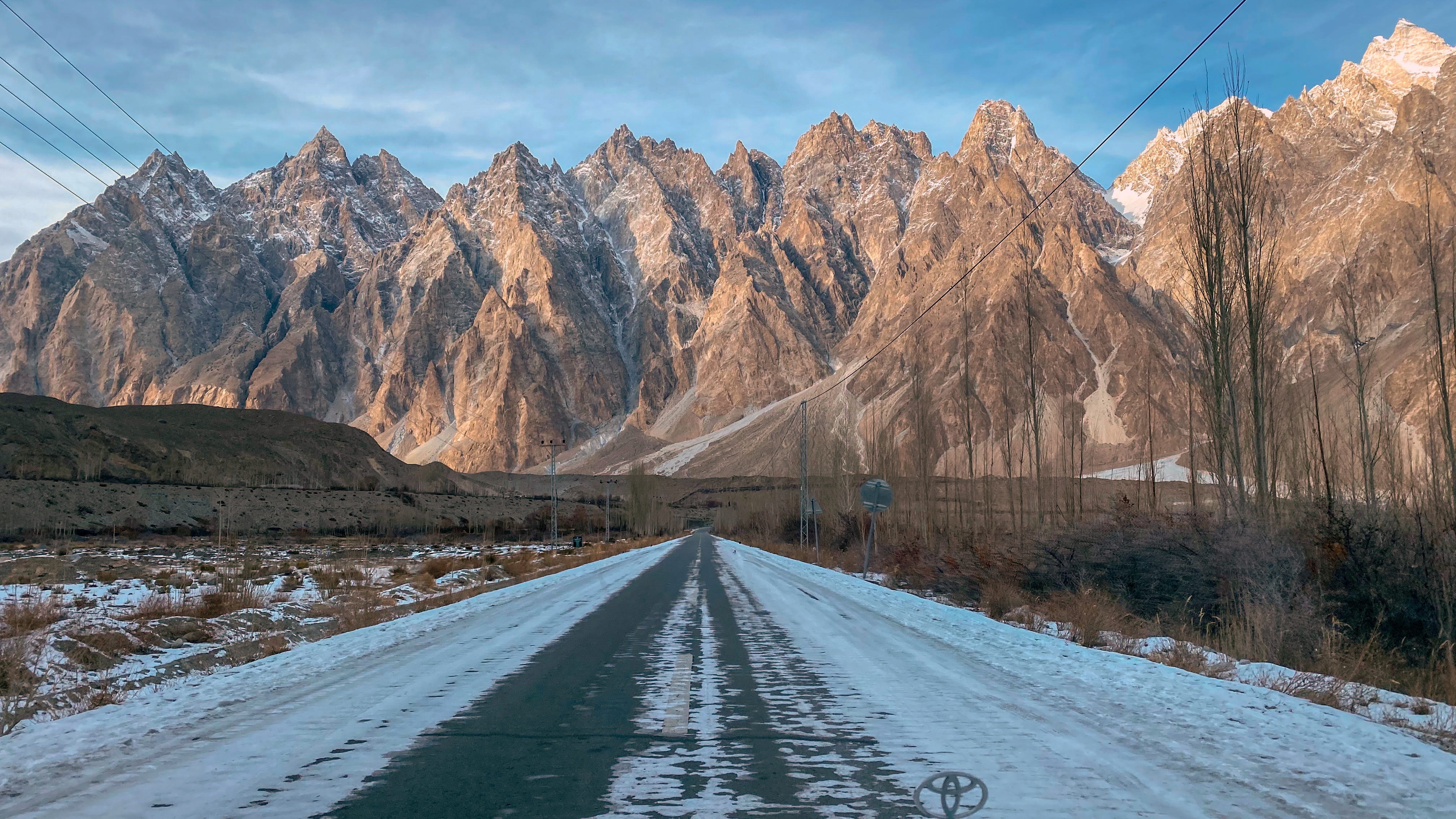
Highlights: Towering 7,000m+ peaks (Rakaposhi, Nanga Parbat views), Attabad Lake, Passu Cones, glaciers, and ancient forts. Often called the “Eighth Wonder.”
Best time: June–August (clear skies, open passes); September–October for autumn colours. Avoid winter (Nov–Mar) for snow.
Latest: Chinese-funded upgrades have made large sections smooth and paved; side roads to Fairy Meadows have been improved.
Factors: Mostly good tarmac, but landslides are possible in the monsoon. Fuel stops and guesthouses are available. Altitude sickness risk above 3,000m—acclimatize. Safe for tourists; self-drive SUVs recommended or hire a chauffeur.
Neelum Valley Road – Azad Kashmir
Distance: Muzaffarabad to Kel ~150–200 km (scenic stretches).
Highlights: Emerald river, pine forests, waterfalls, and terraced villages.
Best time: May–October (pleasant weather).
Latest: Steady road improvements; new viewpoints and eco-tourism spots emerging.
Factors: Easier drive than northern passes; good for beginners. Hotels and local food plentiful. Very safe and family-friendly.
Swat Valley & Malam Jabba Road (Khyber Pakhtunkhwa)
Distance: Islamabad to Kalam ~300 km.
Highlights: Lush orchards, the Swat River, ski slopes at Malam Jabba, and Buddhist heritage.
Best time: May–September.
Factors: Well-paved main roads; a mix of culture and nature. Tourist-friendly with growing facilities.
Makran Coastal Highway – Karachi to Gwadar (Southern Contrast)
Distance: ~650 km.
Highlights: Arabian Sea cliffs, beaches, and desert-meets-ocean views.
Best time: October–March (cooler, less humid).
Factors: Flat, fast, and modern highway—ideal after northern trips. Fewer altitude issues.
Essential Tips for First-Timers
- Road conditions: Major highways have improved dramatically since CPEC investments, but expect potholes, trucks, and animals in rural stretches.
- Safety: Northern areas are tourist-friendly in 2026; check latest advisories and consider police escorts on select KPK segments.
- Vehicle & Prep: Rent a reliable SUV with a driver for comfort. Carry water, snacks, offline maps, and emergency contacts.
- Health & Logistics: Altitude meds, modest clothing, and cash (limited ATMs). Book stays in advance during peak season.
- Best overall strategy: Start with a guided tour or chauffeur for your first drive, then self-explore easier routes.
What Should I Do in an Emergency While Driving in Pakistan?
If you face an emergency while driving in Pakistan — such as a road accident, vehicle breakdown, medical issue, or sudden hazard — stay calm and act quickly. Quick, correct actions can save lives and reduce complications.
Immediate Steps (First 30–60 Seconds)
- Ensure Safety — Pull over to the side of the road if possible. Turn on hazard lights, switch off the engine, and use a warning triangle (if you have one) at least 50–100 meters behind your vehicle, especially at night or on highways.
- Check for Injuries — Assess yourself and passengers first. Do not move seriously injured people unless there is immediate danger (fire, oncoming traffic).
- Call for Help — Dial the appropriate number based on your location:
- Police Emergency — 15 (works nationwide for police assistance, accidents, or security issues). In Islamabad and many cities, it functions like 911.
- Rescue / Ambulance / Fire — 1122 (Punjab Emergency Service and Sindh Emergency Rescue Service – fastest for medical help and road crashes).
- National Highways & Motorway Police (NHMP) — 130 (free call) for any issue on motorways, CPEC routes, or national highways.
- Karachi Traffic Emergency — 1915.
- Edhi Ambulance (backup) — 115.
Give clear details: your exact location (use a Google Maps pin if possible), the number of injured people, and the type of emergency.
For Road Accidents
- Do not leave the scene.
- Take photos of vehicle positions, damage, and road conditions (without disturbing evidence).
- Exchange details with the other driver (name, CNIC, vehicle number, insurance).
- Wait for police to arrive before moving vehicles, unless blocking traffic dangerously.
- For serious injuries, prioritize calling 1122 first.
Vehicle Breakdown or Other Emergencies
- Stay inside the car with doors locked if you feel unsafe, especially at night.
- Call 130 on highways or 15 in cities.
- Keep a basic emergency kit: water, a first-aid box, a flashlight, a reflective jacket, and a charged phone with offline maps.
Additional Tips
- Remain polite and cooperative with responding officers.
- For medical emergencies on remote northern roads (KKH, Naran), response times may be longer — consider travel insurance with evacuation cover.
- A nationwide air ambulance service is planned for 2026 to improve response on
Quick Checklist: Am I Ready to Drive in Pakistan?
- License: My license is valid, I have an IDP, and it is not expired
- Side of road: I remember to drive on the LEFT side
- Speed limits: I know the limits: 50 km/h in cities, 80-100 km/h on highways, up to 120 km/h on motorways
- Alcohol: I will not drink any alcohol if I am driving
- Phone: My phone is in a hands-free mount if I need it for navigation
- Seat belts: Everyone in the front seats is wearing a seat belt, with kids in proper seats
- Documents: I have my license, rental papers from Final Rentals, and insurance info with me
- Emergency numbers: Call 1122 for rescue, Motorway helpline: 130 and 15 for police
- Fuel: I have filled up with gas if going to remote or mountain areas
- Weather: I have checked the forecast—rain or snow can make roads slippery
- Route: I have a map or GPS and know my general direction
- Patience: I am ready to drive carefully and enjoy the journey
If you checked all these boxes, you are ready!
Wrap-Up: How Can I Drive in Pakistan Safely?
Driving in Pakistan can be one of the best parts of your trip. You can explore historic sites, try delicious local food, and see stunning landscapes at your own pace. But with that freedom comes responsibility.
Most importantly, Pakistan is a welcoming country. The people are friendly. The scenery is breathtaking. The experiences are unforgettable. By driving safely and respectfully, you open the door to all of it.
We hope this guide helps you feel confident and prepared. Pakistan is waiting for you—with majestic mountains, historic cities, and warm hospitality. Drive safe, enjoy every kilometer, and make memories that last a lifetime.
Got more questions? Contact Final Rentals customer service, ask your hotel concierge, or visit official Pakistan tourism resources.
About the Author
Final Rentals Editorial Team
The Final Rentals Editorial Team is a group of travel researchers and mobility experts dedicated to creating accurate, practical, and up-to-date travel content for drivers worldwide. Our articles are based on official tourism resources, local driving regulations, and destination research to help travellers plan safer and more enjoyable journeys. From car rental advice to road trip guides and local travel tips, we provide reliable information to help you explore with confidence.