Switzerland Road Trip: A Practical 7 Day Itinerary by Car
September 23rd 2026
Seven days. One rental car. And a map of Switzerland with more mountains, lakes, and one way village roads than most people expect until they actually start planning. If you are putting together a Switzerland road trip for the first time, the hard part usually is not deciding what looks good on a map. It is figuring out which of those places your car can actually reach.
That is the real question behind any Switzerland road trip. Not whether the country is beautiful, because it obviously is, but where your rental car can go and where you will need to park it and finish the journey by train instead. Get that wrong, and you can lose half a day outside a village with nowhere to park, wondering why nobody mentioned this before you booked.
This guide walks through a full 7 day Switzerland road trip itinerary starting from Zurich or Geneva, plus the parking rules, mountain pass conditions, motorway vignette requirements, and rental car details you need before you leave the airport. In this guide, you will learn where to start your route, how to structure 7 days across central Switzerland, the Bernese Oberland and Valais, which villages are closed to your rental car, when mountain passes are open, what documents your rental company expects, and when it makes more sense to park the car and take the train instead.
Key takeaways
A Switzerland road trip works best when you treat the car and the train as one connected system, not competing options.
Every vehicle under 3500 kilograms needs a motorway vignette, currently CHF 40, before using Swiss highways.
Zermatt, Wengen, Murren and Gimmelwald cannot be reached by private car at all, only by train or cable car.
Mountain passes such as the Furka, Grimsel and the Gotthard pass road close for winter, typically from late October or November until late May.
Most foreign driving licences are valid for short visits, but many rental desks still ask for an international driving permit alongside it.
Seven days comfortably covers 4 to 5 regions if you resist the urge to add a sixth.
Table of contents
1. Is a Switzerland road trip actually a good idea?
2. Where should you start your Switzerland road trip?
3. The 7 day Switzerland road trip itinerary
4. What you need before you drive in Switzerland
5. Parking, car free villages and mountain roads you need to know about
6. Car vs train: which is better for your 7 day Switzerland itinerary?
7. Common Switzerland road trip mistakes first time visitors make
8. Frequently asked questions about a Switzerland road trip
Is a Switzerland road trip actually a good idea?

Image source: Joshua Kettle Unsplash
Yes, driving through Switzerland works well as a trip format, but it works differently than a typical driving holiday. The road network is excellent, the scenery along routes like the Grand Tour of Switzerland is genuinely some of the best in Europe, and a car gives you access to smaller towns in Graubunden, Appenzell, and Ticino that the train barely touches. That is the upside, and it is a real one.
Here is the catch. Switzerland also has more restrictions on driving than most first time visitors expect. Several of the country's most photographed villages, including Zermatt and the car free settlements above Lauterbrunnen, do not allow private vehicles at all. Parking in cities like Lucerne, Interlaken and Geneva is expensive and often limited, and mountain roads through the Swiss Alps close completely for around six months of the year.
So the honest answer is that this kind of trip is worth it if you build your route around where cars can actually go, rather than assuming a car gets you everywhere. For this kind of trip, I would treat the rental car as the tool that gets you between regions, and let the train or a cable car finish the last mile into car free villages.
Where should you start your Switzerland road trip?
Most 7 day Switzerland road trip itineraries start from one of two airports, Zurich or Geneva, and the choice mostly comes down to which regions you want to prioritize first.
Starting from Zurich
Zurich sits close to Lucerne and central Switzerland, which makes it a natural starting point if your route heads toward the Bernese Oberland, the Jungfrau region, and Zermatt before finishing near Lake Geneva. Zurich International Airport has rental desks for the major companies right in the arrivals area, so you can rent a car at Zurich International Airport and be on the motorway within about 20 minutes of landing.
Starting from Geneva
Geneva works well if you would rather begin near Lake Geneva, Lausanne and Montreux, then head into Valais and up toward Zermatt before finishing in central Switzerland or the Bernese Oberland. It also puts you close to the French Alps if you want to extend the trip. You can rent a car at Geneva International Airport on arrival.
One way or round trip?
If you fly into Zurich and out of Geneva, or the other way around, a one way rental saves you from backtracking across the country just to return the car where you picked it up. Most companies charge a one way fee for this, and it is worth checking how one way car rental fees work before you commit to a route, since it can change which airport actually makes sense as your start point.
The 7 day Switzerland road trip itinerary
Here is a route that balances driving time against actual time spent in each place, built around Zurich as the start and Geneva as the finish, which works well as a one way Switzerland road trip.
Days 1 and 2: Lucerne and central Switzerland

image source: Pexels
Pick up your rental car in Zurich and drive to Lucerne, about 50 minutes on the motorway. Spend your first afternoon around Lake Lucerne and the old town, then use day 2 for a side trip, either up Mount Pilatus or across to Lake Thun on your way toward Interlaken.
Day 3 and 4, Interlaken, Grindelwald and the Jungfrau region
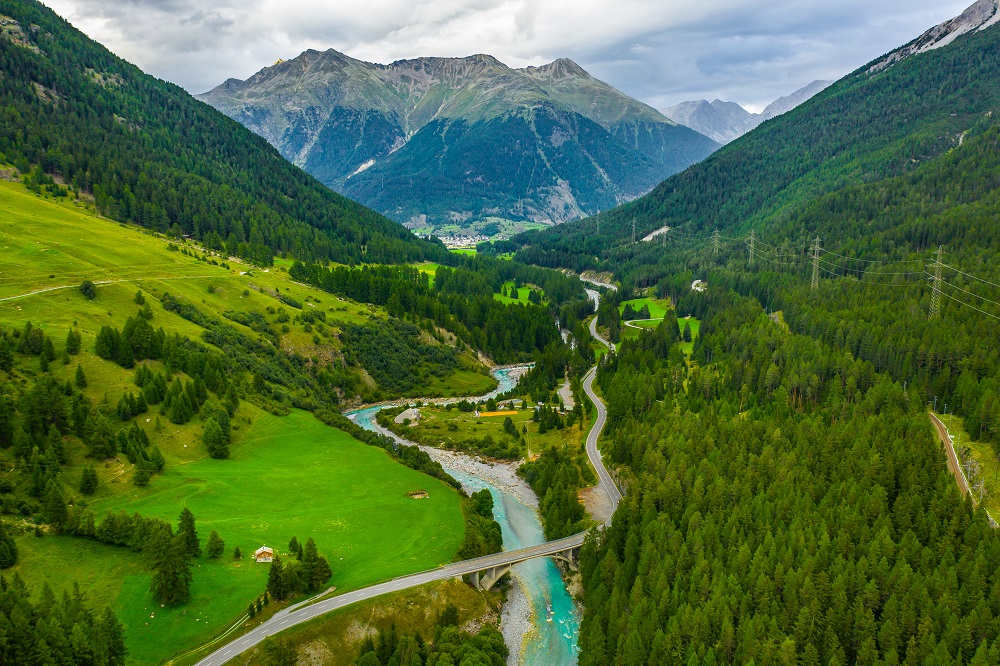
Interlaken sits between Lake Thun and Lake Brienz and makes a good base for the Jungfrau region. From here you can drive to Grindelwald, then continue toward Lauterbrunnen, where the valley narrows and the road effectively ends. This is where you park and switch to rail if you want to reach Wengen, Murren, Gimmelwald or continue up to Jungfraujoch. Grindelwald itself is drivable, and it is one of the better bases if you want to keep the car close.

Image Source: Unsplash
Day 5, Zermatt and the Matterhorn
This is the longest driving day of the trip, roughly 2.5 to 3 hours from Interlaken to Tasch. Zermatt itself is car free, so you will park in Tasch and take the short shuttle train in. Plan for this day to be about the journey and the view of the Matterhorn, not about covering more ground afterward.

Image source: Pexels
Day 6, Valais and the route toward Lake Geneva
Drive down the Rhone valley through Valais, with the option of a detour into the Bernese highlands or straight toward Montreux and the Chateau de Chillon on Lake Geneva.
Day 7, Lausanne, Geneva and departure
Spend the morning in Lausanne or along the Lake Geneva waterfront, then drive the final stretch into Geneva to return the car and catch your flight.
That structure gives you 5 core regions across 7 days without a day that is purely spent driving with nothing at the other end. If you would rather loop back to Zurich instead of flying out of Geneva, cut the Lake Geneva leg and add an extra night in Grindelwald or a detour east toward Chur and Graubunden instead.
Pro tip
Book your Tasch parking space online in advance if you are visiting Zermatt between June and September, or over Christmas and New Year. The Matterhorn Terminal fills up on peak days, and arriving without a reservation can mean circling for a spot while your shuttle train window closes.
What you need before you drive in Switzerland
Before you collect your rental car, there are three things worth sorting out: your licence, the motorway vignette and what your rental company will actually ask for at the counter. If you have not chosen a vehicle yet, this is also a good time to book your car rental in Switzerland around your pickup location, trip length and planned route.
Your driving licence and the international driving permit question
A valid driving licence from your home country is generally accepted for short term visitors in Switzerland. That said, if your licence is not printed in a Latin alphabet, or your rental company simply prefers extra documentation, an international driving permit is often requested alongside your original licence. It costs little, takes a day or two to arrange through your home country's motoring authority, and removes any doubt at the rental counter.
The Swiss motorway vignette, explained
The Swiss motorway vignette is defined as a prepaid sticker or digital pass that every vehicle under 3500 kilograms must display to use Switzerland's national motorway network. Unlike most European countries, Switzerland does not sell short term passes.
According to the Federal Roads Office (FEDRO), the vignette is sold only as an annual product, currently priced at CHF 40, and covers use through January of the following year (astra.admin.ch, 2026).
If your rental car already has one attached, you are covered. If you are bringing a car in from a neighboring country, or picking up in a location where the vignette is not automatically included, buy it before your first motorway on ramp. Driving on a vignette road without one typically results in an on the spot fine on top of the vignette cost itself.
What your rental company will ask for at pickup
Expect to show your driving licence, the credit card used for booking, and your passport. Most companies also place a security deposit hold on that card, separate from the rental price itself.
Parking, car free villages and mountain roads you need to know about
This is the section that actually determines whether your itinerary runs smoothly or turns into a scramble for parking.
The Alpine Access Ladder

Image source: Pexels
It helps to think about Swiss destinations on what I would call the Alpine Access Ladder, a simple way to sort where your rental car can realistically go. Tier one places, like Lucerne, Interlaken and Grindelwald, you can drive straight into and park in town. Tier two places, like Zermatt, you drive to the edge of, park, and finish the journey by train or cable car. Tier three places, the high alpine huts and some summer only trail access points, are not reachable by any vehicle at all. Knowing which tier a destination sits in before you build your route saves you from planning a driving day into somewhere your car was never going to reach.
Zermatt and the Tasch parking system
Zermatt has been car free for as long as most residents can remember, and private vehicles are only permitted as far as Tasch, about 5 kilometers away. The Matterhorn Terminal in Tasch offers 2,100 covered parking spaces, with more than 1,000 additional spaces from private operators nearby. Shuttle trains run the Tasch to Zermatt route every 20 minutes and the ride takes about 12 minutes, dropping you right in the center of the village.
Detail | Information |
|---|---|
Nearest car access point | Tasch, about 5 km before Zermatt |
Covered parking spaces at Matterhorn Terminal | 2,100 |
Shuttle train frequency | Every 20 minutes |
Shuttle train journey time | About 12 minutes |
Parking cost, standard car, 1 day | Around CHF 17 per day, less when booked online |
Wengen, Murren and Gimmelwald

Image source: Pexels
These three villages sit above Lauterbrunnen and share the same rule as Zermatt, no private cars. You will leave your rental car in Lauterbrunnen or a designated valley car park and continue by cog railway or cable car. This is one of the most common surprises for first time visitors, since these villages look drivable on a standard map but simply are not.
Mountain pass closures and winter tyres
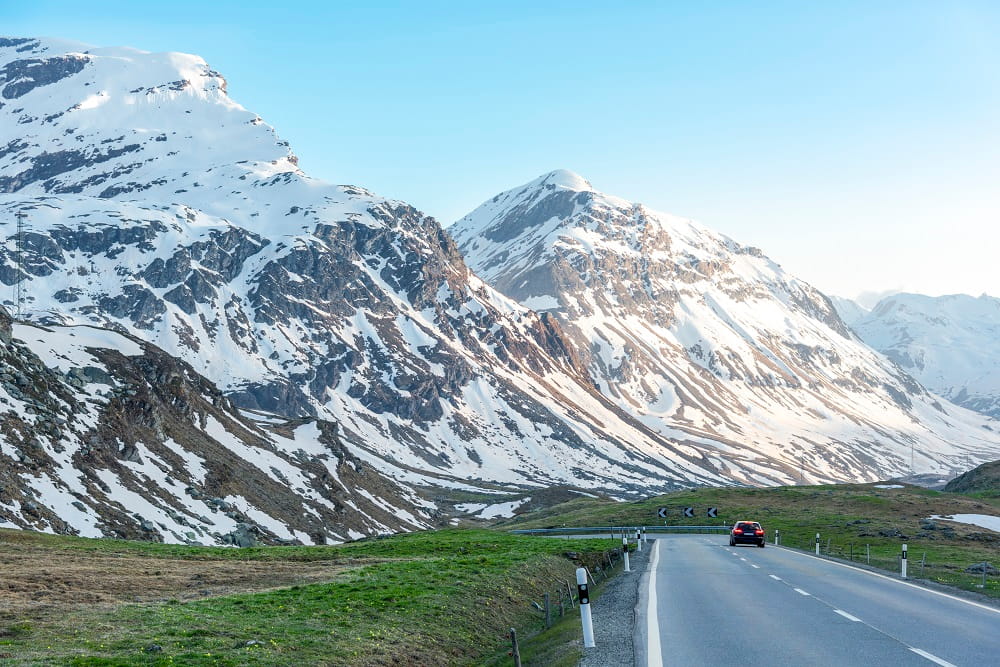
High alpine routes including the Furka Pass, Grimsel Pass and the Gotthard Pass road (not the tunnel, which stays open year round) close completely for winter. The same Swiss road rules that apply elsewhere in the country still matter on these routes, where conditions can change quickly with altitude and weather. According to FEDRO, several major passes including the Furka, Grimsel, Susten and San Bernardino were closed by early November in the 2025 to 2026 season, with typical reopening in late May the following year (FEDRO, 2025). If your trip falls outside June through September, check current pass status before routing through the high Alps, and if you are driving between November and April, confirm your rental car has winter tyres fitted, since several cantons require them by law in winter conditions.
Car vs train, which is better for your 7 day Switzerland itinerary?
For most of the route, a rental car gives you more flexibility. For the car free villages, the train or cable car is not optional, it is the only way in. The honest answer for most travelers is a mixed approach, and the table below breaks down why.
Option | Best for | Approx. cost, 7 days | Flexibility | Verdict |
|---|---|---|---|---|
Rental car only | Central Switzerland, Bernese Oberland driving, scenic mountain passes | Car rental plus CHF 40 vignette, fuel and parking | High between regions, zero inside car free villages | Strong for most of the route |
Swiss Travel Pass, train only | First time visitors who want zero driving stress | Multi day pass, priced by duration and class | High on rail lines, limited off them | Good if skipping remote villages |
Mixed: rental car plus regional train tickets | Most 7 day Switzerland road trip itineraries | Rental car cost plus a few point to point tickets | Highest overall | Recommended for this itinerary |
Private transfer or taxi | Short car free village hops only | Higher per trip than train | Convenient, not cost efficient for a full week | Use sparingly |
Domestic flights | Not applicable for this itinerary | Not cost effective for a country this size | Low relevance | Skip entirely |
Winner: the mixed approach. Keep the rental car for the driving legs between Lucerne, Interlaken, Grindelwald and the Valais route toward Geneva, and buy individual train or cable car tickets for the Zermatt, Wengen, Murren and Gimmelwald legs where the car cannot follow you anyway.
Common Switzerland road trip mistakes first time visitors make
A few mistakes show up again and again in first time itineraries, and most of them are easy to avoid once you know to look for them.
1. Assuming the rental car can reach every village on the map. Check the Alpine Access Ladder tier before you commit a driving day to somewhere the car cannot actually enter.
2. Skipping the vignette until the first toll booth. Switzerland does not use toll booths, it uses roadside enforcement, so buy the vignette before you need it, not after you are already on the motorway.
3. Underestimating mountain road driving time. A route that looks like 90 minutes on a flat map can take twice that on a winding alpine pass, especially behind slower traffic.
4. Ignoring seasonal pass closures. Routing your itinerary over the Furka or Grimsel Pass in October without checking current status can mean an unplanned detour of several hours.
5. Packing 8 destinations into a 7 day route. Five well chosen regions with real time in each beats eight rushed stops.
6. Not booking Tasch parking ahead of peak summer weekends. Arriving without a reservation on a busy Saturday can cost you an hour of circling.
7. Forgetting the one way rental fee when planning a Zurich to Geneva route. Confirm the fee before it changes your budget mid trip.
The 5 Step Swiss Road Trip Planning Checklist
Step 1: Pick your start and end airport, Zurich, Geneva or the same city both ways, and check whether a one way fee applies.
Step 2: Map your route against the Alpine Access Ladder so you know which stops are drive in, park and ride, or no vehicle access.
Step 3: Buy your motorway vignette and confirm whether an international driving permit is worth arranging alongside your licence.
Step 4: Book Tasch parking and any Jungfraujoch or Schilthorn cable car tickets in advance if traveling in peak season.
Step 5: Build in one buffer day for mountain weather, road closures or simply wanting to stay somewhere longer than planned.
A real world scenario
A traveler lands in Zurich, picks up a rental car, and builds a 7 day route that includes an overnight in Zermatt without realizing the car cannot go past Tasch. They arrive in Tasch in the early evening, find the main parking structure fuller than expected because they had not booked ahead, and lose 30 to 40 minutes finding a space before catching a later shuttle than planned. The fix is simple, book Tasch parking online in advance and treat the shuttle train timing as part of your daily schedule, not an afterthought.
Frequently asked questions about a Switzerland road trip
Is a Switzerland road trip worth it?
Yes, a Switzerland road trip is worth it if you plan around the country's car free villages instead of against them. The driving between regions is genuinely scenic, and the train fills the gaps a car cannot reach, so the two work best together rather than as competing choices.
Is 7 days enough for a Switzerland road trip?
Seven days is enough for a focused route through 4 to 5 regions, such as central Switzerland, the Bernese Oberland and Zermatt or the Lake Geneva area. It is not enough to add Ticino, Graubunden and St Moritz on top without cutting something else out.
Can you drive to Zermatt?
No, private cars cannot drive into Zermatt itself. You park in Tasch, about 5 kilometers away, and take a 12 minute shuttle train the rest of the way, with trains running roughly every 20 minutes.
Do you need a car in Switzerland?
You do not strictly need a car, since the Swiss rail network reaches most major towns, but a car gives you access to scenic mountain routes and smaller villages that trains do not serve directly, which is the main reason people choose this kind of trip over a rail only itinerary.
How much does the Swiss motorway vignette cost?
The Swiss motorway vignette currently costs CHF 40 and covers one vehicle for an annual period, since Switzerland does not sell short term or daily vignettes.
Do I need an international driving permit for a Switzerland road trip?
In most cases a valid driving licence from your home country is accepted for short visits, but an international driving permit is often requested by rental companies, particularly if your licence is not printed in a Latin alphabet, so it is worth arranging one before you travel.
What is the best route for a 7 day Switzerland road trip from Zurich?
A strong 7 day Switzerland road trip from Zurich runs through Lucerne, Interlaken and Grindelwald, down to Zermatt, then along the Rhone valley toward Lake Geneva before finishing in Geneva, which also allows for a convenient one way rental return.
Are mountain passes open year round in Switzerland?
No, several high alpine passes including the Furka, Grimsel and the Gotthard Pass road close for winter, typically from late October or November through late May, though the Gotthard road tunnel itself stays open all year as an alternative route.
How much does a rental car cost for a week in Switzerland?
Rental car costs vary by vehicle class, season and pickup location, so it is best to compare current rates directly rather than rely on a fixed figure, but budget separately for the CHF 40 vignette, fuel and parking on top of the base rental price.
Conclusion
A Switzerland road trip rewards travelers who plan around the country's car free villages rather than being surprised by them. Start from Zurich or Geneva depending on which regions you want first, build your route using the Alpine Access Ladder so you know where the car stops and the train takes over, and buy your vignette before your first motorway on ramp. Seven days is enough time to do this well if you keep your stop count realistic and leave room for one buffer day.
Next steps:
Confirm your start and end airport and check the one way rental fee if they differ.
Map your 7 days against the regions above and mark which stops are drive in versus park and ride.
When you are ready, book a reliable car rental with FinalRentals and, if visiting Zermatt in peak season, reserve Tasch parking in advance.
About the author
Jean Genevieve is a travel and car rental content specialist focused on practical guidance for international travelers, with a background covering rental requirements, road conditions, driving rules and self drive planning across Europe. This article was researched using official Swiss government and transport sources, including the Federal Roads Office and Zermatt's official arrival information, current as of the date above.
Sources and references
Federal Roads Office (FEDRO), Switzerland, motorway vignette and alpine pass status information, astra.admin.ch, 2026.
Zermatt official tourism and arrival information, Matterhorn Gotthard Bahn, zermatt.ch.